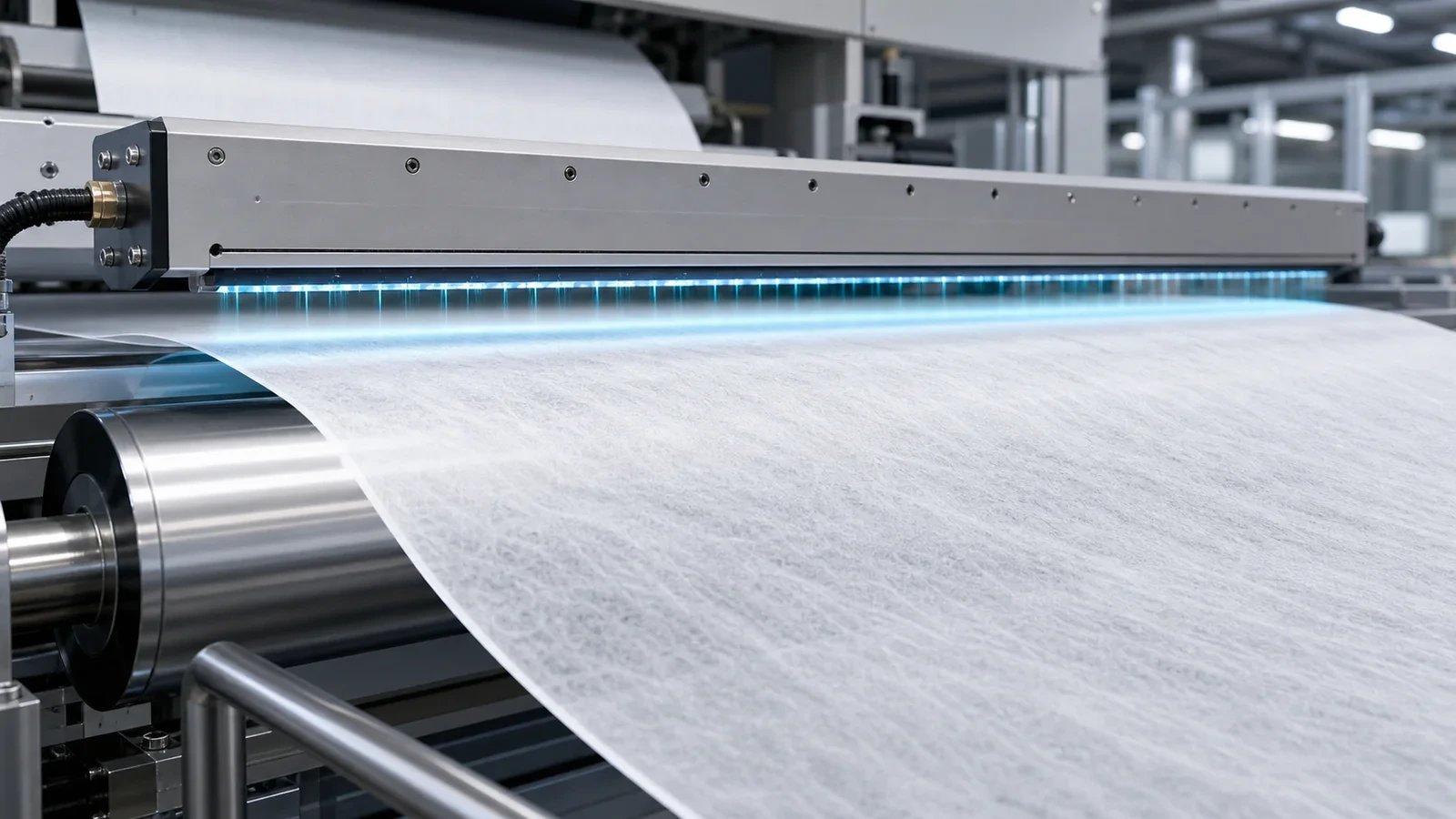
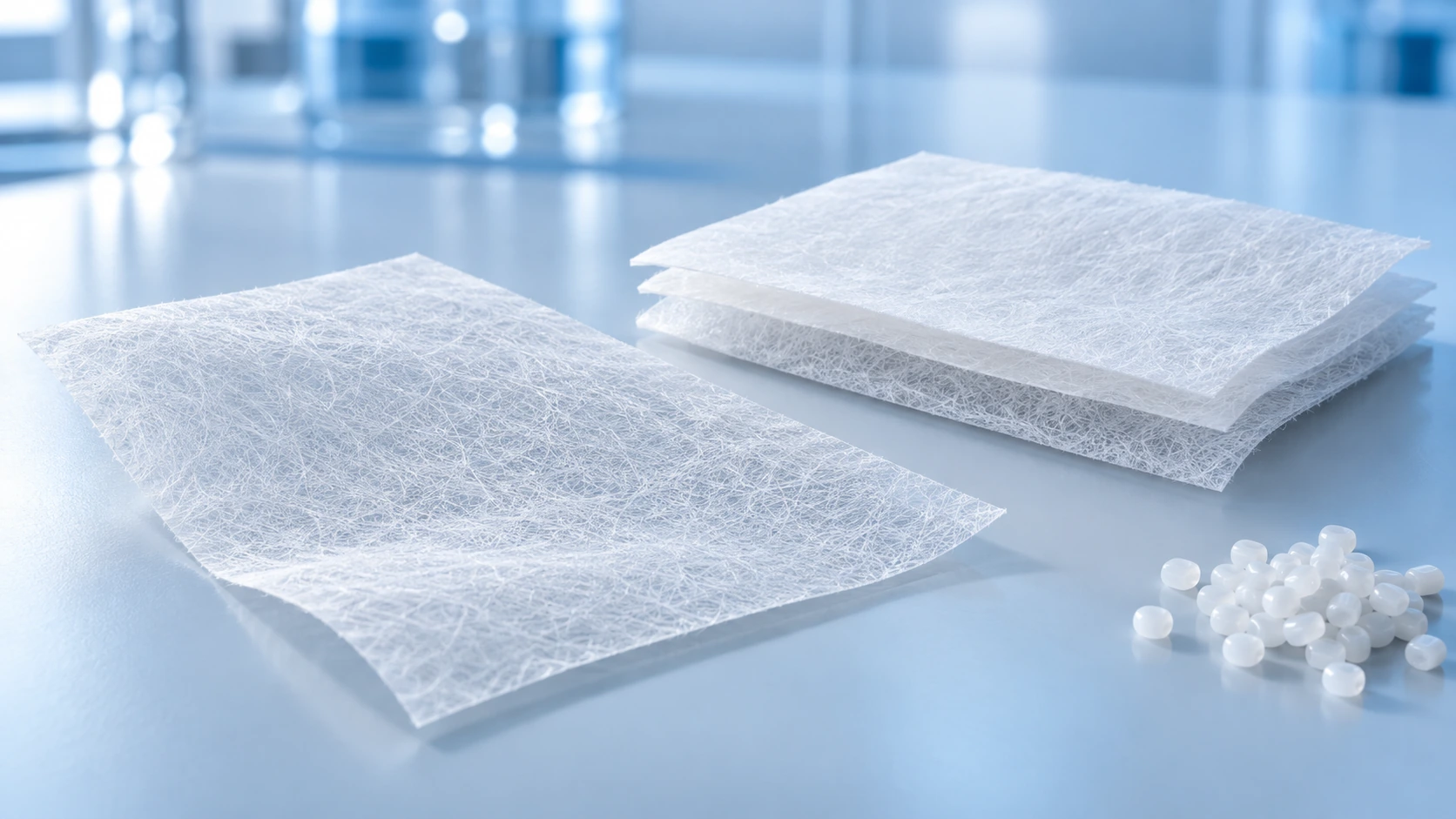
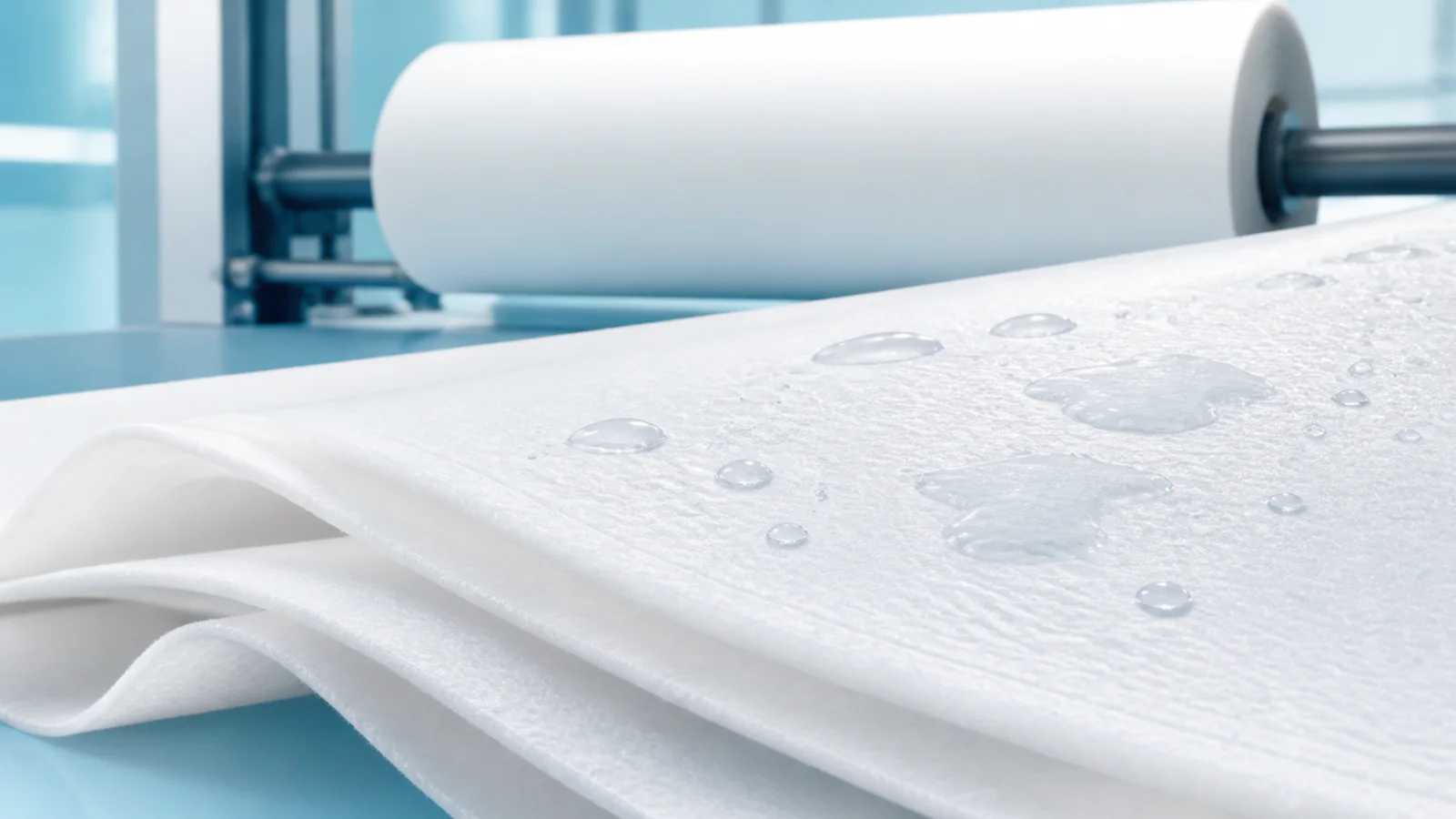
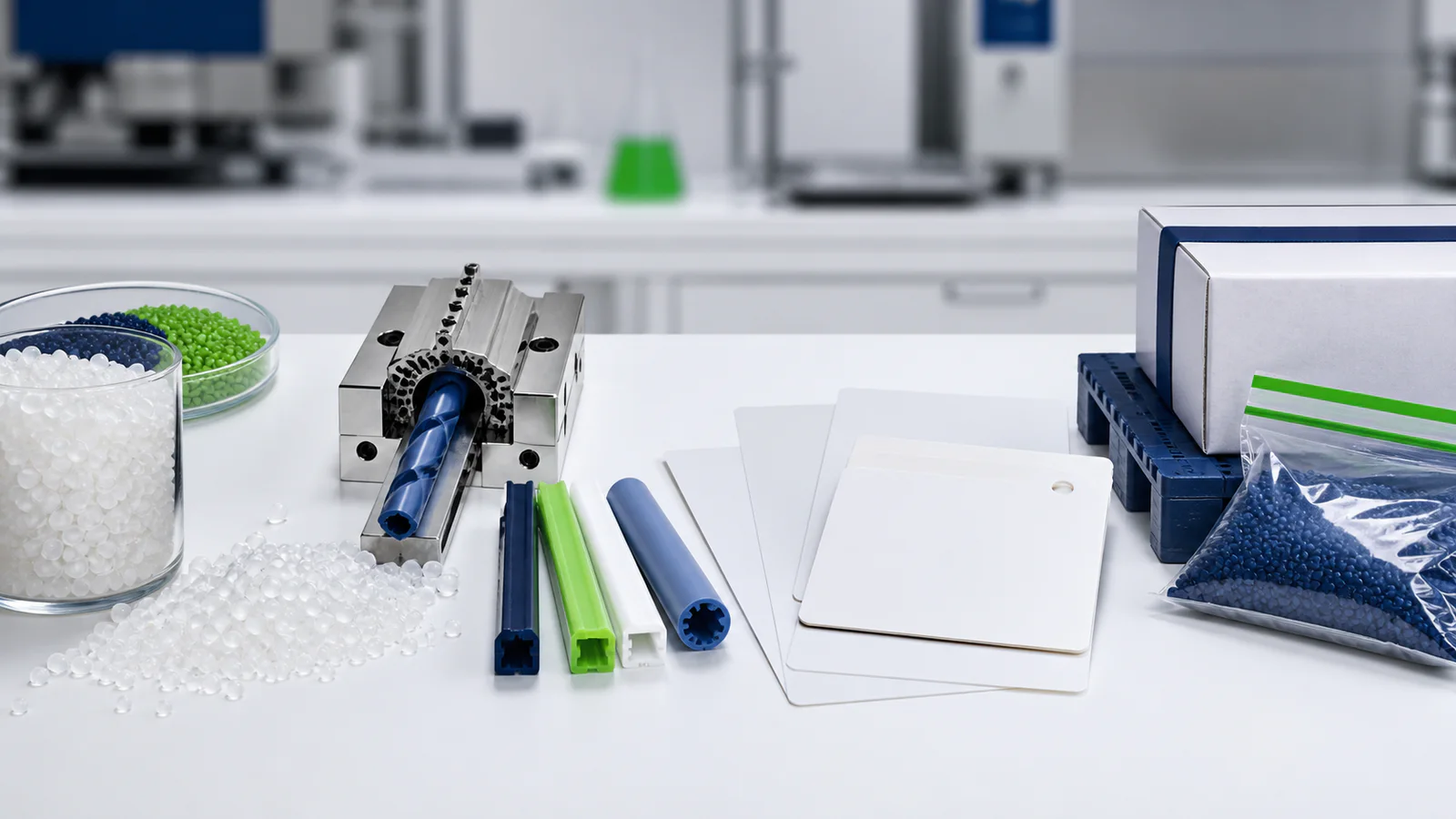
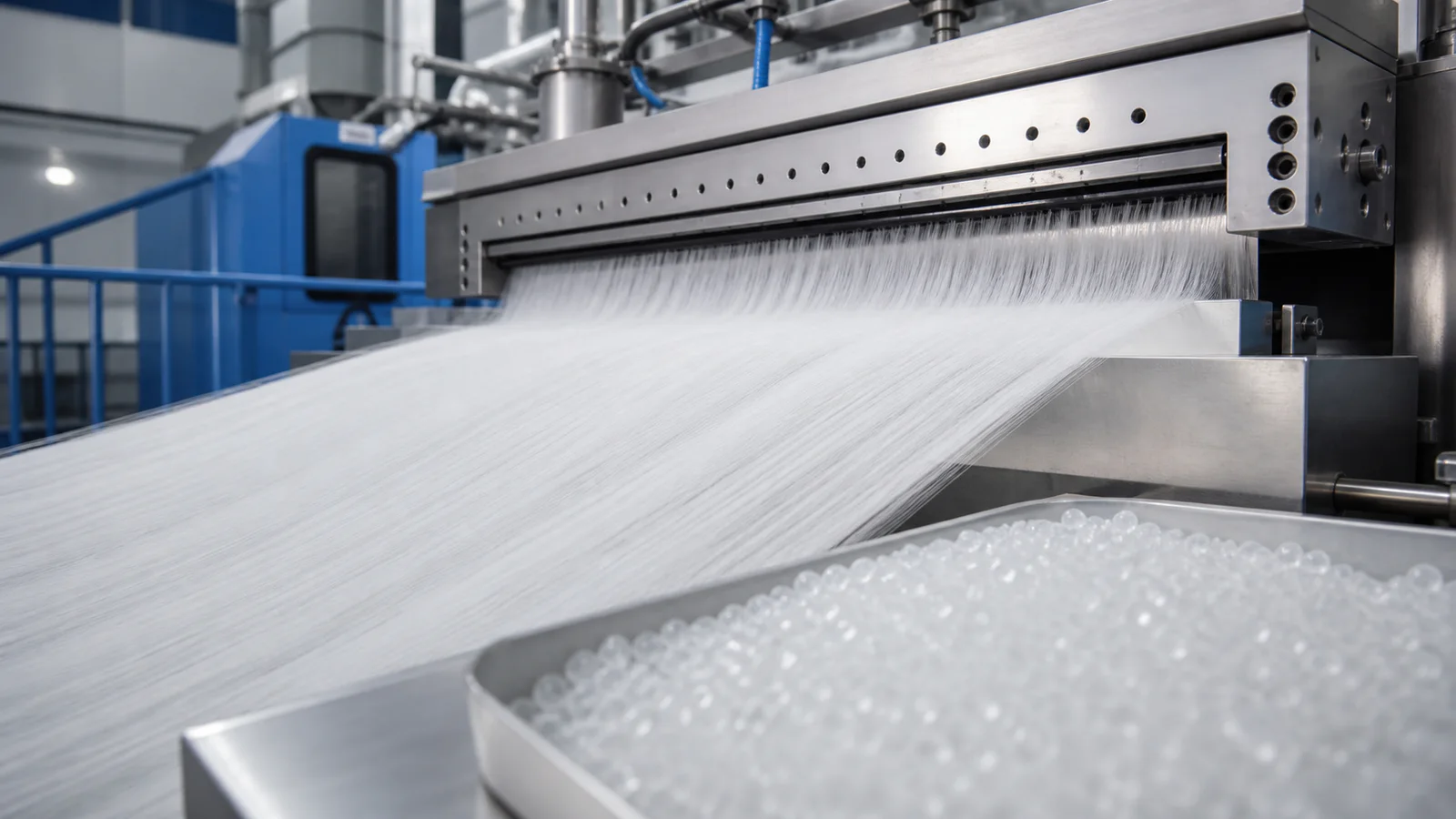
Water-Electret Meltblown in Storage: Charge Retention and Moisture Control
A water-electret storage review should separate filtration stability, drying and signs of contamination instead of assigning one cause to every complaint.
UV masterbatch for PP spunbond: separate UV blocking from weathering
UPF or UV transmission and long-term weathering answer different questions. The target, fabric construction, exposure and test method must be defined first.
Electret masterbatch for PP meltblown: what to confirm beyond efficiency
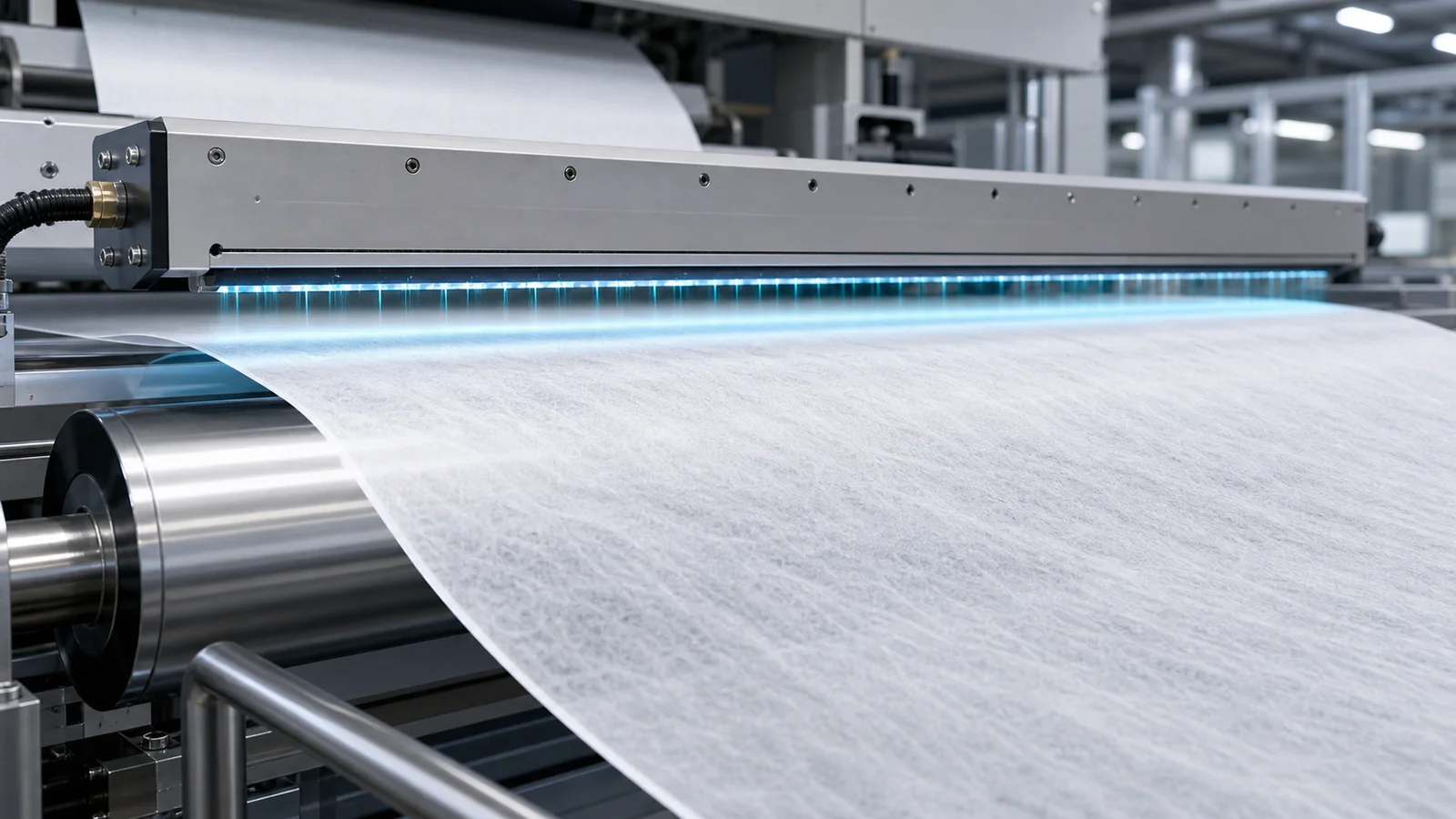
Filtration efficiency and pressure drop are system results. A useful electret review starts with the charging route, web target, conditioning and test method.
We use public industry questions to plan topics, then write every article independently around the application, test method and product status we can support. External technical references are identified when they are needed; competitor wording, visuals and branded claims are not reused.
One topic · three formats
Designed for the website, Facebook and mobile reading.
The message stays consistent while the depth and layout change for each channel.
Independent site
Full article
Hero image, clear introduction, section navigation, application details, checklist, FAQ and one technical-review action.
Best for search and qualificationFacebook
Single useful idea
One question-led headline, one original image, three concise points and a link to the complete article.
Best for discovery and conversationMobile
Fast vertical reading
Short paragraphs, full-width images, stacked cards, visible headings and one thumb-friendly action at a time.
Best for WhatsApp and social traffic
Editorial roadmap
Nine series, released in useful sequences.
The roadmap starts from public industry questions, but every Baibang article uses an original structure, application logic and visual system.
01
Polymer fundamentals
Clear introductions to masterbatches, additive functions, carriers and qualification.
02
PP spunbond
Hydrophilic, antistatic, UV protection, softness and color selection.
03
PP meltblown
Resin flow, electret routes, filtration variables, color and flame retardancy.
04
PE applications
Film, extrusion, packaging and foam routes connected to the right validation questions.
05
EPP applications
Color and function for expanded polypropylene, reviewed around bead processing and molded parts.
06
Color masterbatch
Dispersion, carrier compatibility, shade approval and process stability.
07
Functional masterbatch
How additives work, where they fit and what must be validated.
08
XPE / IXPE
Crosslink route, foaming system and application-specific qualification.
09
Buyer guides
Supplier selection, trial preparation, documentation and technical questions.
Need a specific topic?
Start from your actual process.
Tell us the polymer, process and target performance. We can prioritize the next guide around a real application question.