Why a yellowing complaint needs an agreed specification
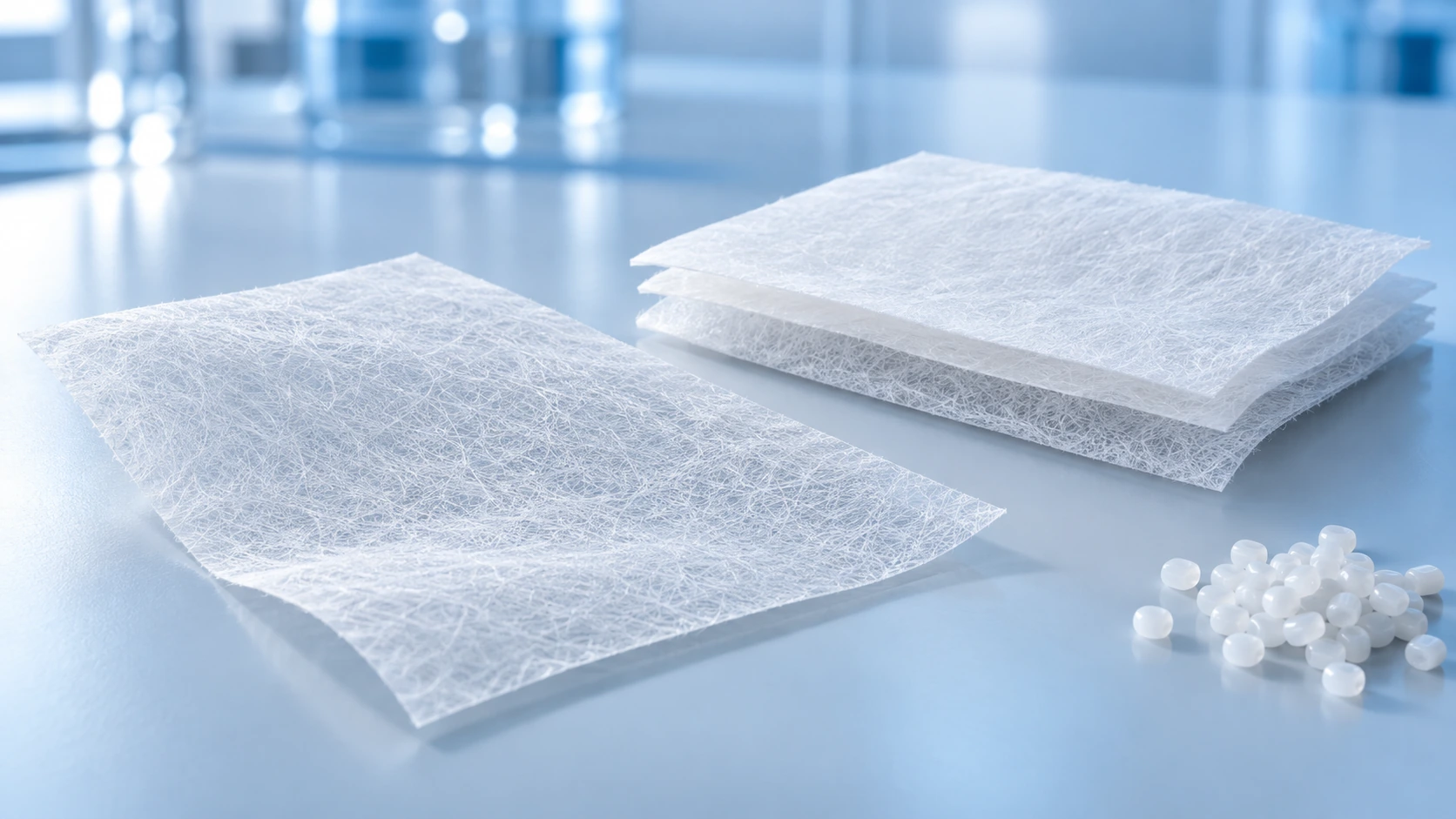
Two rolls may look different under different lights. A complaint needs a documented comparison: the same material, a retained reference, defined assessment conditions and a written acceptance requirement. A photo can help record the observation, but it cannot identify the chemical cause.
For white PP meltblown, separate two questions: does the material show phenolic-yellowing potential under the agreed test, and what caused the actual storage complaint? They require related evidence, but a screening result alone does not answer both.
What ISO 105-X18 assesses
ISO 105-X18:2007 addresses the potential for phenolic yellowing of textile materials. Its scope does not include every cause of yellow discoloration. Ask the laboratory to confirm suitability for the actual meltblown specimen and the method required by the buyer.
Do not present the test as a reproduction of an entire warehouse or convert its conditioning time into a number of storage weeks. Packaging, exposure history and other discoloration routes still need their own investigation.
Read the procedure and controls behind the grade
Commercial phenolic-yellowing materials include specified test papers, control fabric and BHT-free wrapping film. James Heal also lists a grey scale for staining assessment. These items have different roles; an ordinary white sample or a photograph is not a substitute for the specified reference materials.
Request the exact method and edition, specimen preparation, consumable identification, conditioning parameters, control outcome and assessment reference from the laboratory. This article is a report-reading guide, not a complete laboratory procedure. Follow the adopted standard and validated laboratory instructions for execution.
- Identify the tested production lot and retained reference.
- Check that the report records the required controls and any deviations.
- Compare results only when methods and assessment conditions are compatible.

A grade needs a buyer-agreed acceptance requirement
A grey-scale report may express the assessment on a 1–5 scale, including intermediate grades. Confirm which reference and assessment procedure the laboratory used before interpreting the number.
Grade 4 is not a universal passing line. If a purchase specification requires a minimum grade of 4 under a named method, a valid result can be compared with that requirement. The same number cannot establish compliance with an unspecified requirement or a different test.
Agree the end use, specimen, method and acceptance criterion before ordering. A result meeting that criterion does not guarantee no future yellowing, identify the source of a complaint or establish filtration performance.
Keep fabric evidence and packaging evidence distinct
A fabric screening test and an analysis of the actual packaging answer different questions. Review the relevant wrapper, film lot, tape and liners alongside affected and unaffected material. Ask for packaging evidence against the buyer’s applicable requirements.
The 25 ppm example discussed in Episode 1 belongs to a specific packaging restricted-substance list. It is not a universal limit for meltblown packaging or a guarantee against discoloration. Apply the requirement relevant to the buyer and component, with an appropriate method and reporting limit.
An adverse screening result warrants investigation. It does not by itself prove that the packaging, resin, additive or process caused the stored-roll complaint. Changes to a filtration product also require the agreed finished-media checks.
Six questions before accepting a supplier report
A complete reply helps you review the evidence; it does not by itself prove a controlled process. Check whether the report is traceable to the actual lot and whether its method matches the purchase specification.
- Which named method and edition were used, and was the specimen suitable?
- Which preparation, consumables, conditioning and assessment conditions were recorded?
- What happened to the specified control, and were there deviations?
- Which acceptance requirement was agreed for this end use?
- Which laboratory issued the report, when, and for which production lot?
- What separate evidence covers the actual packaging and storage history?
Prepare a useful technical review
Share the PP meltblown end use, lot identification, retained reference, discoloration history, packaging details and available report. Include the buyer’s named method and acceptance requirement. Baibang Materials can then discuss the application and missing evidence without promising a diagnosis or a passing result.
Sources and method scope
- ISO 105-X18:2007 — official scope and edition — Public abstract checked 9 Oct 2026. Assesses phenolic-yellowing potential; other causes are outside its scope. The complete paid standard was not accessed.
- James Heal — Test Materials brochure, phenolic-yellowing kit and grey scales — Brochure PDF pages 8 and 10 reviewed. Lists reference materials and grading scales; not a complete method or a Baibang test report.