Translate “soft” into the touch result the buyer wants
Fabric hand can include softness, smoothness, drape, flexibility, fullness, dryness or a lower scratchy feel. Two buyers can use the word “soft” while expecting different results. Begin with a reference fabric and name the hand attributes that should change.
A controlled panel can make a subjective comparison more repeatable when specimens, conditioning, presentation sequence and evaluation language are kept consistent.
Compare like with like
Basis weight, filament size, bonding pattern, calender conditions and layer construction can change hand even before a softening route is added. Trial and control fabrics should therefore use the same resin, structure and production target wherever possible.
Support touch evaluation with useful measurements
No single instrument describes the complete human sensation, but stiffness or bending, surface friction, thickness and compressibility can help explain a panel result. Select only measurements connected to the customer’s end use and keep the specimen direction, conditioning and method consistent.
Protect mechanical performance and converting behavior
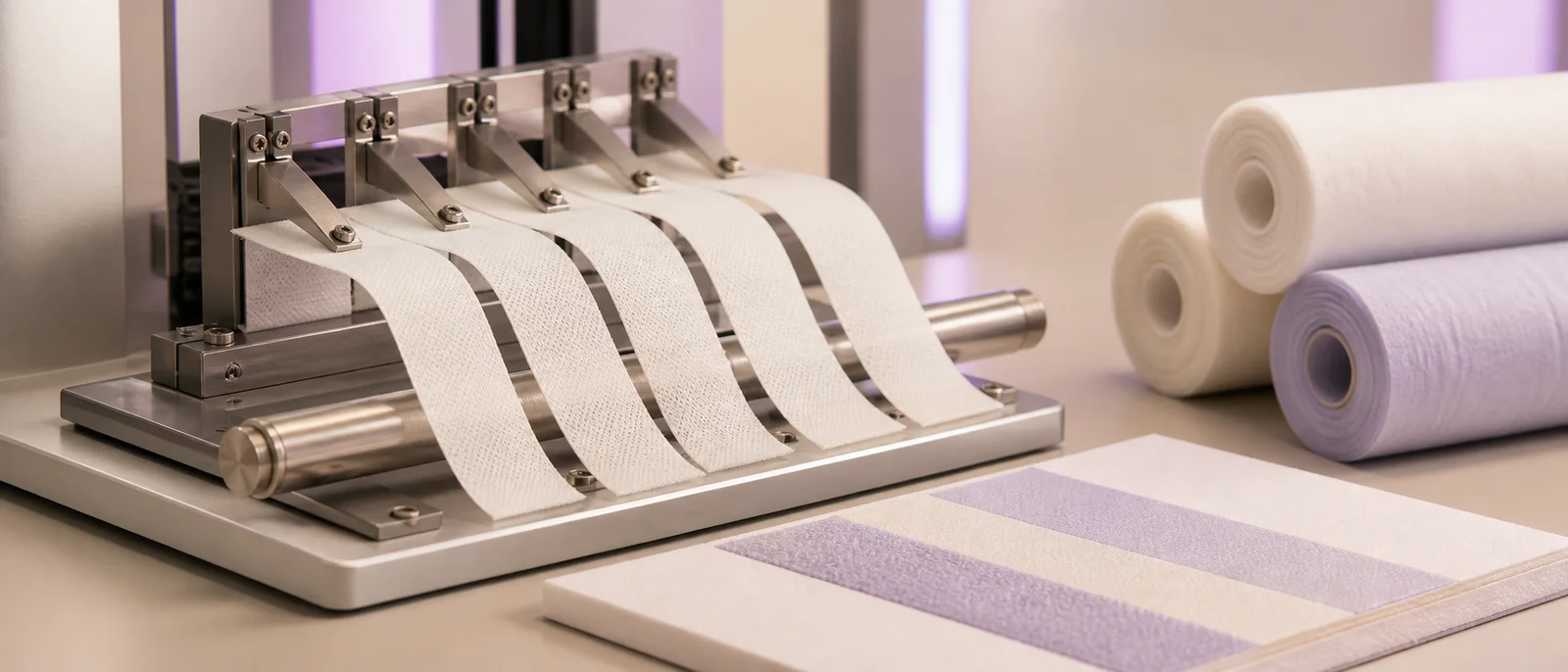
A softer hand should not be approved without checking tensile strength, elongation, bonding, web uniformity and the downstream converting steps that matter. Winding, slitting, printing, lamination or ultrasonic bonding can reveal trade-offs that a hand panel alone will not show.
Record timing and line behavior
The observed hand can change with conditioning time, storage and temperature. Record when the fabric is evaluated. During the trial, also monitor spinning stability, deposits, pressure, drawing, bonding and roll handling so the hand improvement is not separated from process performance.
A practical first-review checklist
Send a control fabric or agreed reference, the desired hand attributes, PP resin and MFI, fabric construction, conditioning method and the mechanical or converting limits that must remain acceptable.
- Reference fabric and hand vocabulary
- PP resin and MFI test condition
- Fabric structure, basis weight and bond pattern
- Panel or instrumental evaluation method
- Tensile, elongation and bonding limits
- Conditioning time and downstream converting route