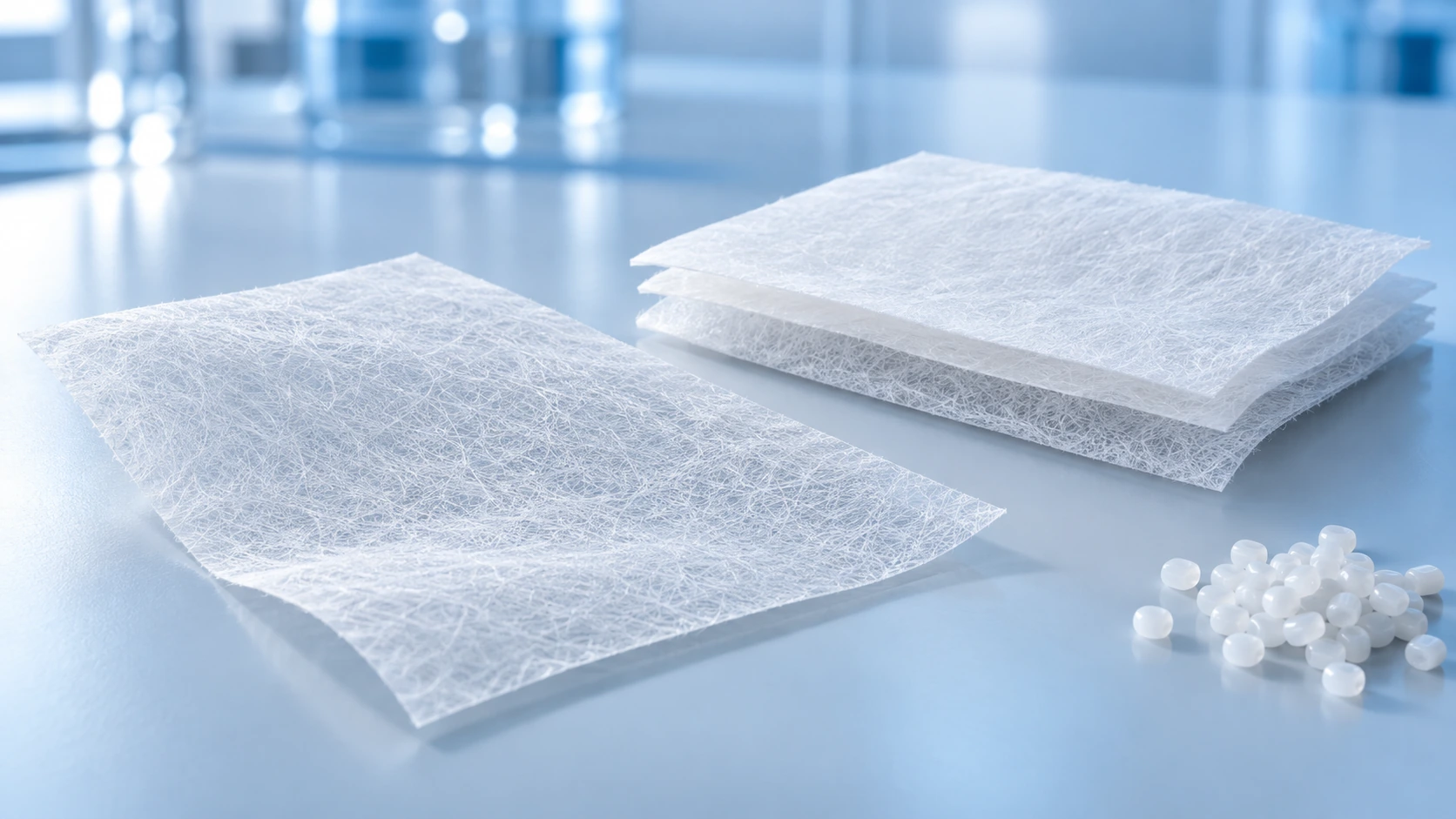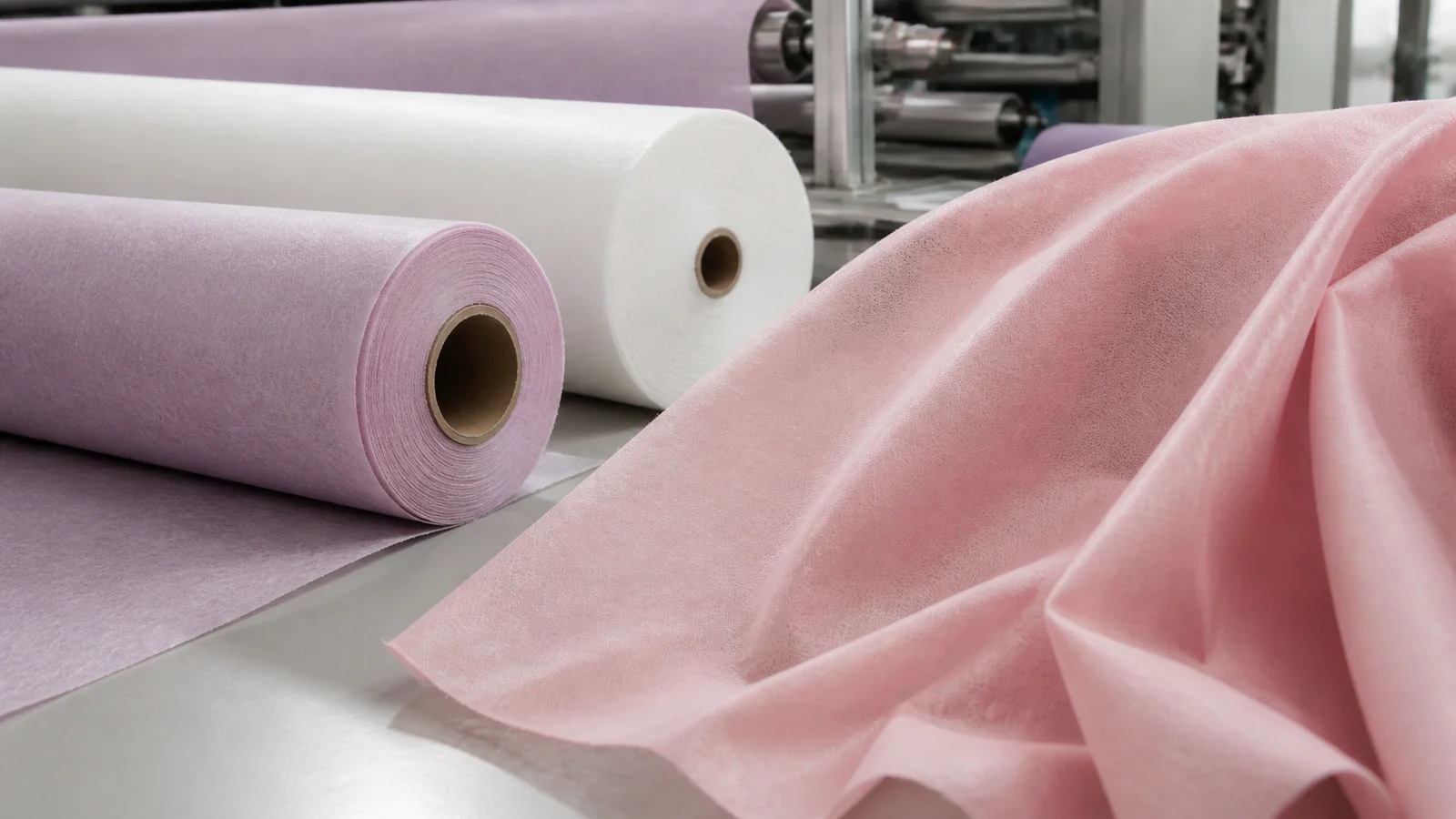
The color chip is only one part of approval
A masterbatch may match the requested shade in a plaque or another molding process and still behave differently on a meltblown line. Meltblown uses a demanding flow and filtration path, so visual approval should be combined with process approval.
Dispersion affects both appearance and stability
Poorly dispersed pigment can create streaks, specks or uneven color. It can also contribute to screen pressure changes and unstable spinning. Dispersion therefore belongs in the technical conversation, not only in the color-matching report.
Carrier compatibility and MFI must be considered together
The carrier should be compatible with the PP system and appropriate for the meltblown flow window. A color masterbatch designed for a different process cannot be assumed suitable simply because the pigment is correct.
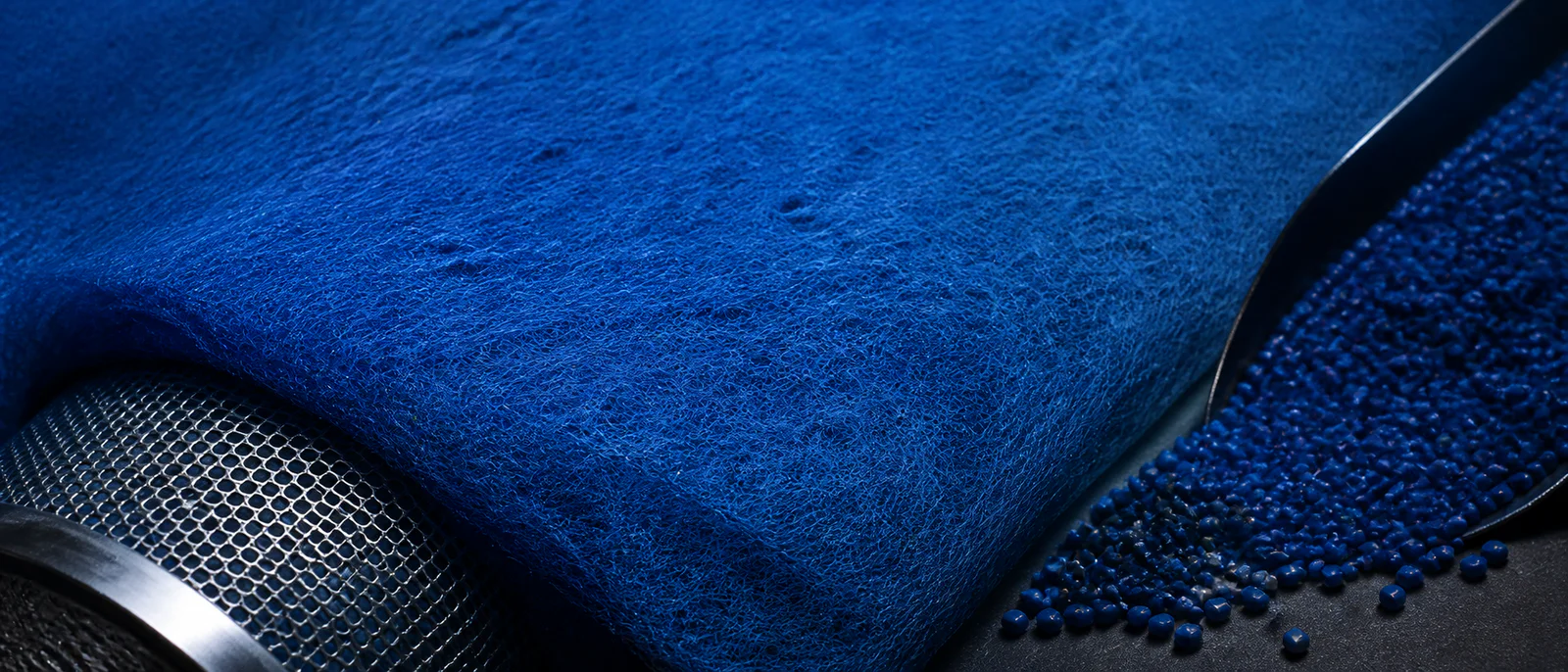
Dosage changes more than color depth
A darker target may need a higher addition level, but dosage can also influence flow, pressure and the finished web. The color target should be agreed together with the acceptable operating window and any filtration-performance requirements.
Approve the color on the actual line
The most useful trial compares shade, web uniformity, screen or filter pressure, spinning stability and the relevant finished-web result under the customer’s normal conditions. Keep the baseline resin, process settings and evaluation method recorded so the result can be reproduced.
- Target color or physical sample
- Base resin and MFI
- Current dosage and mixing method
- Line conditions and pressure baseline
- Finished-web acceptance method