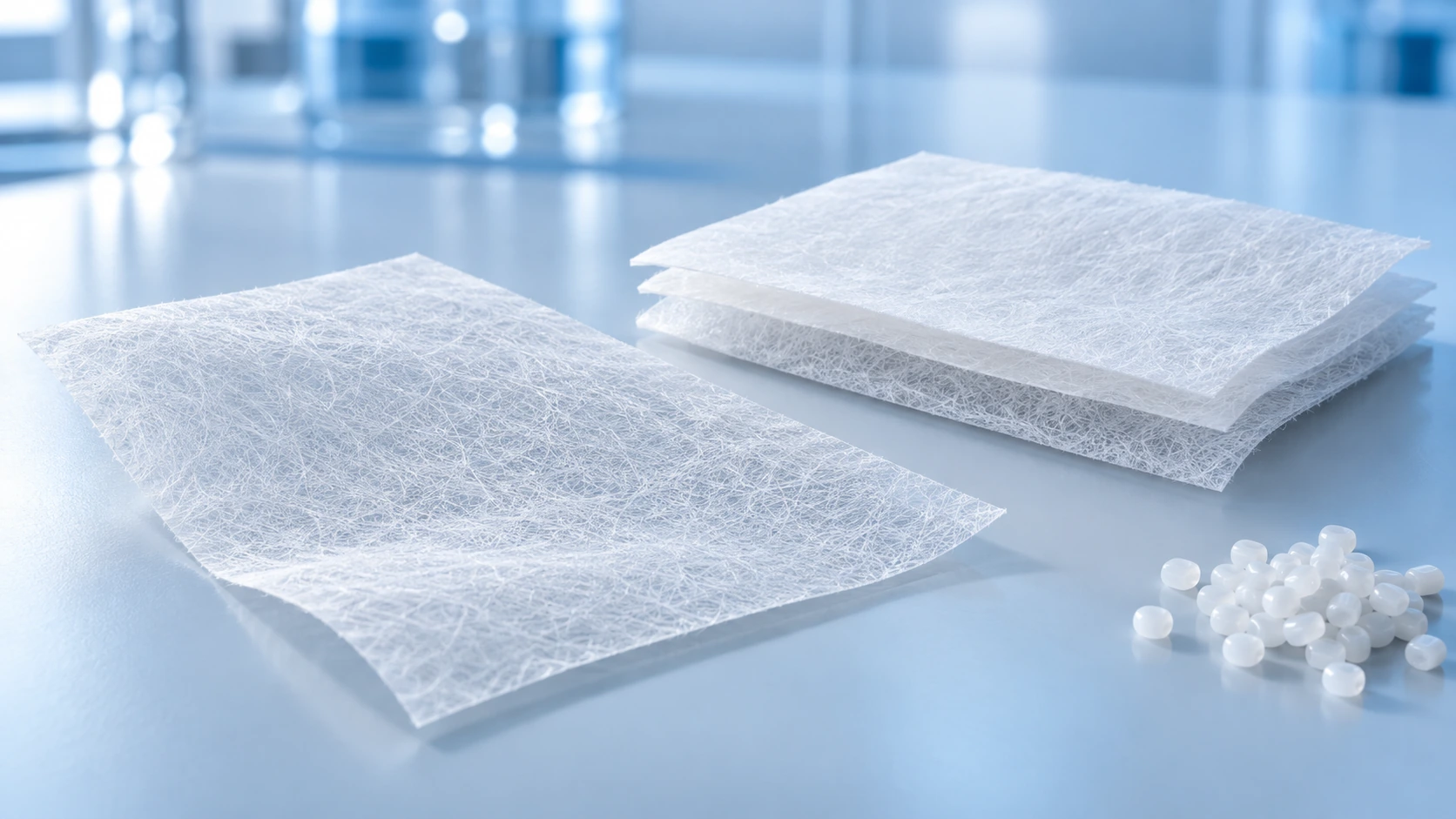
Start with the media target
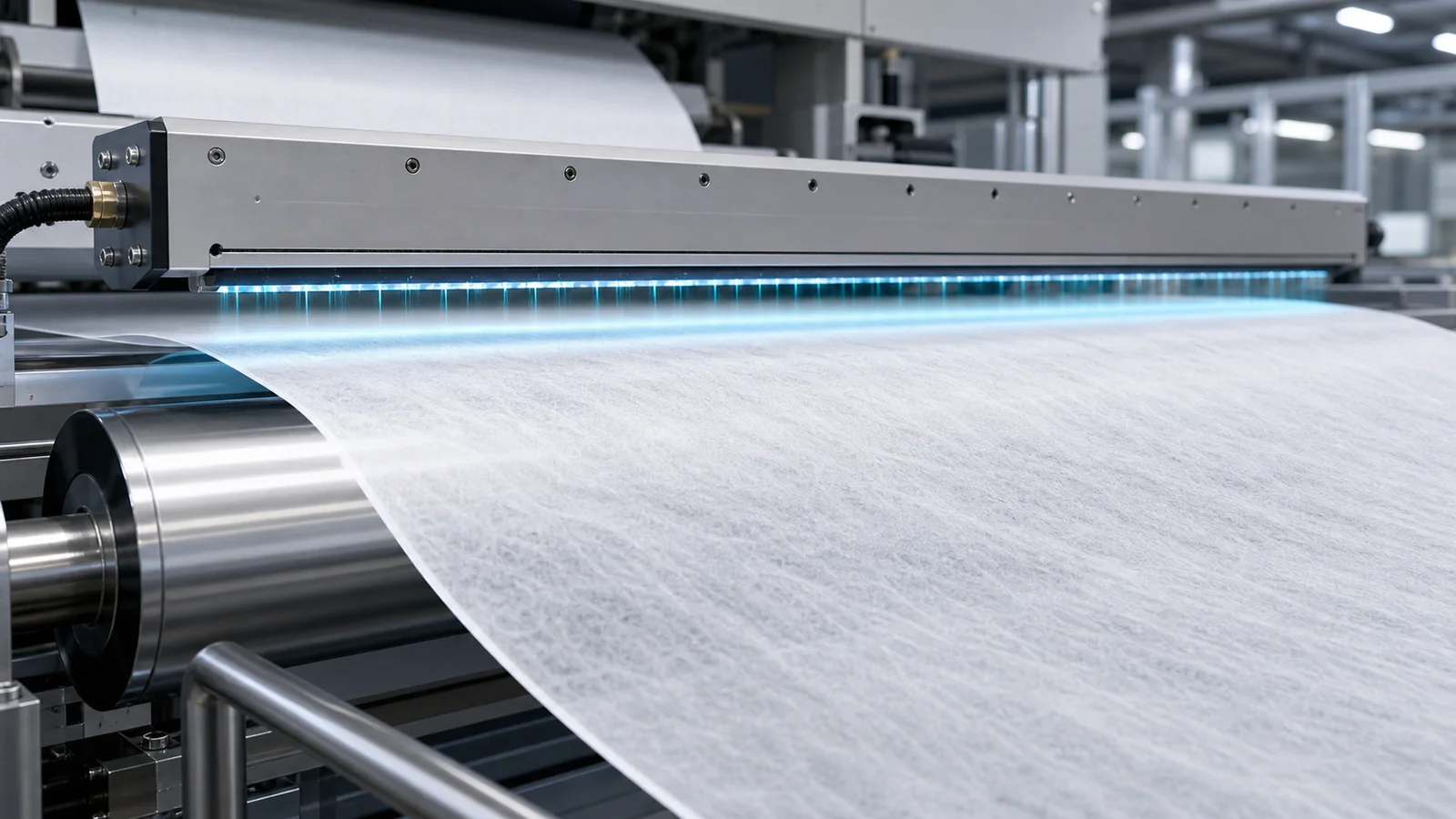
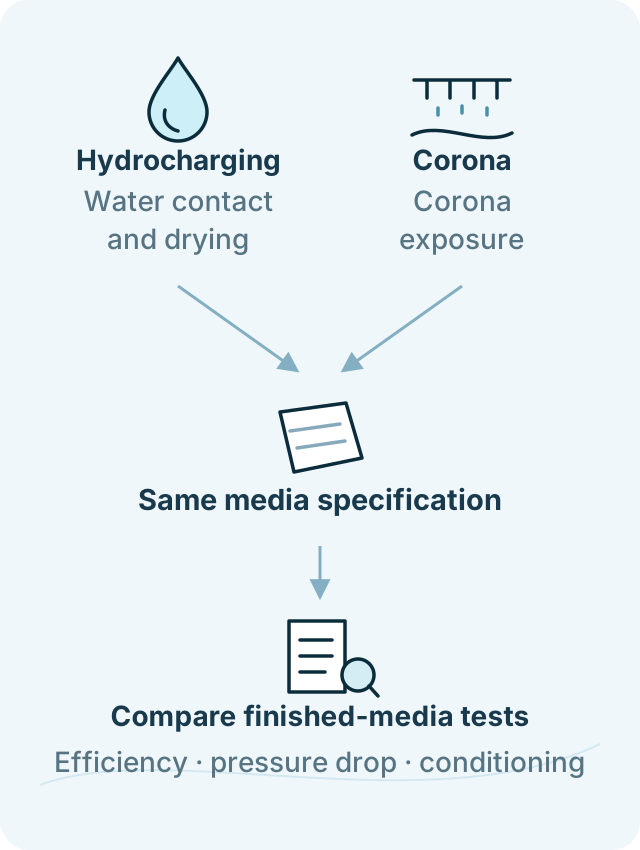
Many PP meltblown filter media use electrostatic charge alongside mechanical particle capture. Water charging and corona charging are two established ways to introduce that charge. A route name alone does not tell you the finished efficiency, airflow resistance or useful storage life.
For a buyer, the question is practical: which process can the producer control consistently, and what evidence supports the media at delivery and after the agreed conditioning? Compare both routes against the same end use and test conditions.
What the two routes do
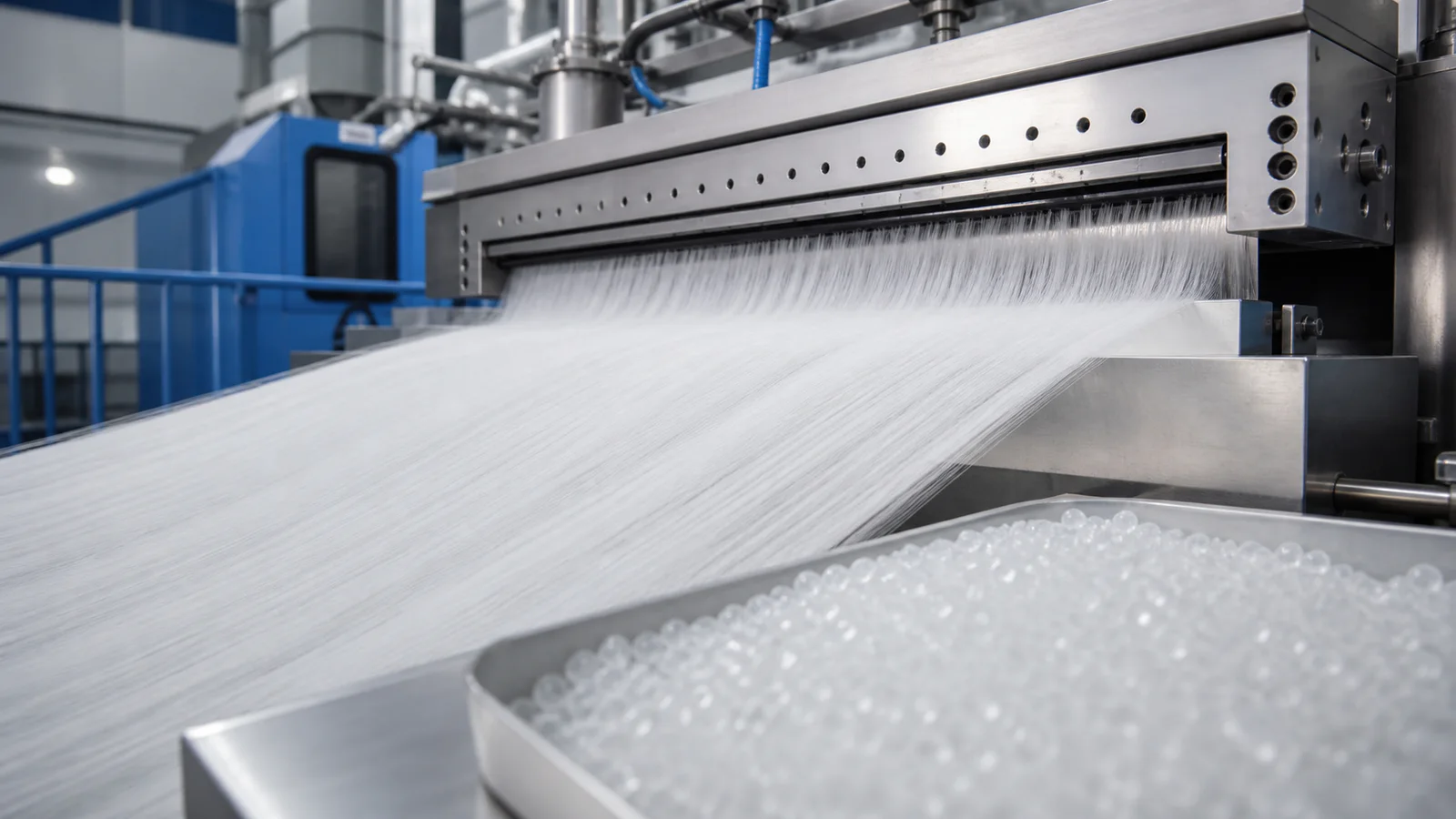
Water electret charging, often called hydrocharging, uses water contact with the fiber web followed by water removal and drying. Published hydrocharging research connects the resulting filtration improvement with stored charge and identifies water properties, spray conditions and drying as relevant process variables. It is not simply a matter of spraying any water onto any web. Hydrocharging study, Journal of Electrostatics, 2022.
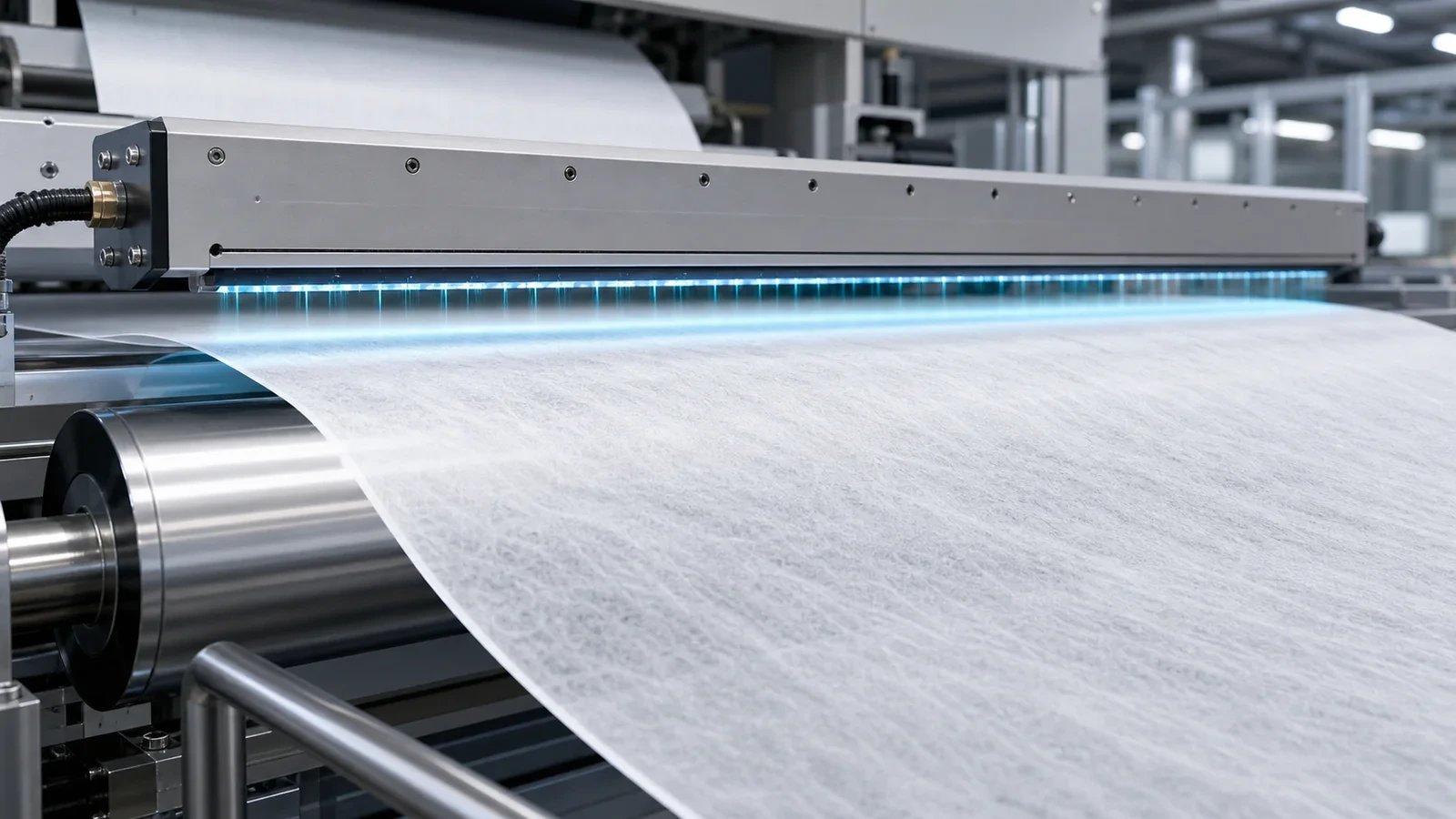
Corona charging uses high-voltage discharge to generate charge carriers near the web. Electrode arrangement, polarity, charging conditions and the media itself matter. Research on PP meltblown shows that different charging and thermal histories can change charge retention; increasing voltage is not a universal recipe for better media. Thermally stimulated charging study, Polymers, 2020.
Water charging: assess the complete wet process
A water-only charging step does not rely on high-voltage air discharge. That removes the corona-discharge ozone mechanism at that step. Keep the claim specific: hybrid charging equipment, water treatment or other equipment may introduce separate electrical or emission considerations. Confirm the actual line rather than describing an entire plant as ozone-free.
Plan the water supply and its quality control, filtration or reuse arrangement, drainage, web handling and drying capacity. The moisture acceptance requirement and its verification belong in the production specification. Do not copy a drying temperature from a paper without validating it for the actual web, formulation and line speed.
Water charging does not establish an additive-free, odor-free or migration-free product. The web can contain resin additives and an electret masterbatch. Ask for the formulation declaration and relevant end-use evidence before making those commercial claims. Hydrocharged samples in published work include additive-modified PP. Route-comparison study, e-Polymers, 2025.
Corona charging: assess the electrical section
Corona provides a dry charging step, so it does not itself require the water-removal stage of hydrocharging. That does not mean the entire production line has no moisture variables. Resin handling, ambient conditions and subsequent operations still need to be understood.
Air corona can generate ozone. Review the equipment supplier’s emission information and the plant’s exposure assessment, extraction and monitoring arrangements. Ozone output depends on the equipment and operating conditions; a fixed ozone level or universal ventilation design cannot be inferred from the route name. The EPA describes ozone generation in corona-based equipment, and NIOSH identifies its respiratory effects. EPA corona fundamentals, NIOSH ozone guide.
Include power supplies, electrode cleanliness and condition, insulation, interlocks and the supplier’s service requirements in the operating review. Request a validated process window for the actual media. The useful setting is the one that delivers repeatable results, rather than the largest setting on the control panel.
Charge retention is a material-and-process result
Storage conditions matter, but retention does not belong to the warehouse alone. Formulation, fiber structure, charging history and subsequent handling also affect the result.
A 2025 experimental comparison found different filtration stability for its hydrocharged and corona-charged samples under aerosol loading, heating and solvent treatment. This supports evaluating route and formulation together. It does not prove that every water-charged grade outlasts every corona-charged grade, or convert an accelerated treatment into a shelf-life claim. Route-comparison study.
Compare operating cost on the actual line
There is no general cost winner in this guide. Build the comparison from supplier quotations and a realistic production trial: equipment changes, water treatment, pumping and drying energy, electrical charging and extraction, space, service, throughput, waste and yield.
Respirator media, HVAC media, cabin filters and industrial products have different specifications. An application label alone does not select the charging route or establish a standard result. Existing equipment and staff experience are useful inputs, but the agreed media tests should decide whether the proposed setup is suitable.
- What charging equipment is actually installed: water, corona or a combined route?
- What utilities, floor space and maintenance capacity does the proposed process require?
- Can the supplier demonstrate repeatability and conditioned performance on the intended formulation?
Buy a documented media specification
Ask for results from a representative, traceable lot. Compare filtration efficiency and pressure drop using compatible aerosol, particle-size, flow or face-velocity, area and sample conditions. Record the conditioning protocol and any loading test required for the end use.
Electrostatic capture can improve filtration without making a web denser, but a lower pressure drop is not guaranteed when the route, web structure or formulation changes. Measure both outputs. A corona study reported efficiency improvement at unchanged pressure drop for its tested samples; that result belongs to those samples and conditions. Corona filter study, Polymers, 2021.
- Initial efficiency and pressure drop, with the complete test conditions.
- Efficiency and pressure drop after the buyer-agreed conditioning or loading.
- Written packaging, storage and handling guidance supported by the supplier’s evidence.
Prepare a useful line review
Share the PP grade and additive system, web construction, end use, charging equipment, line speed, utilities and target test method. Include the current baseline and the problem you want to solve. Baibang Materials can then discuss the application and the evidence needed for a trial.
Treat a route change as an engineering and validation project. Agree the equipment scope with the line supplier and validate the finished media before drawing conclusions about cost, retention or end-use suitability.
Sources and method scope
- Wang et al., Journal of Electrostatics (2022), hydrocharging charge characteristics — Publisher-indexed abstract and introduction checked. Supports relevant hydrocharging variables and coexisting charge signs. Complete paper not obtained.
- Zhang et al., Polymers (2020), thermally stimulated charging — Publisher-indexed abstract and results excerpts checked. Demonstrates dependence on charging and thermal history for studied PP webs; no universal setting.
- Liu et al., e-Polymers (2025), corona/hydro comparison — Publisher-indexed abstract, methods excerpts and conclusions checked. Formulation and particular test conditions limit comparison; not shelf-life or Baibang data.
- EPA, Manual of Electrostatic Precipitator Technology, Part I — Official manual read. Supports corona ozone mechanism in electrostatic equipment, not emissions measured on a meltblown line.
- NIOSH Pocket Guide, Ozone — Official page read. Supports ozone respiratory hazard. No local legal threshold or plant ventilation design specified here.
- Zhang et al., Polymers (2021), multi-layer corona filters — Publisher-indexed methods and results checked. Efficiency/pressure-drop finding applies to tested webs at stated flow and aerosol conditions only.