From hydrocharging to a stored roll
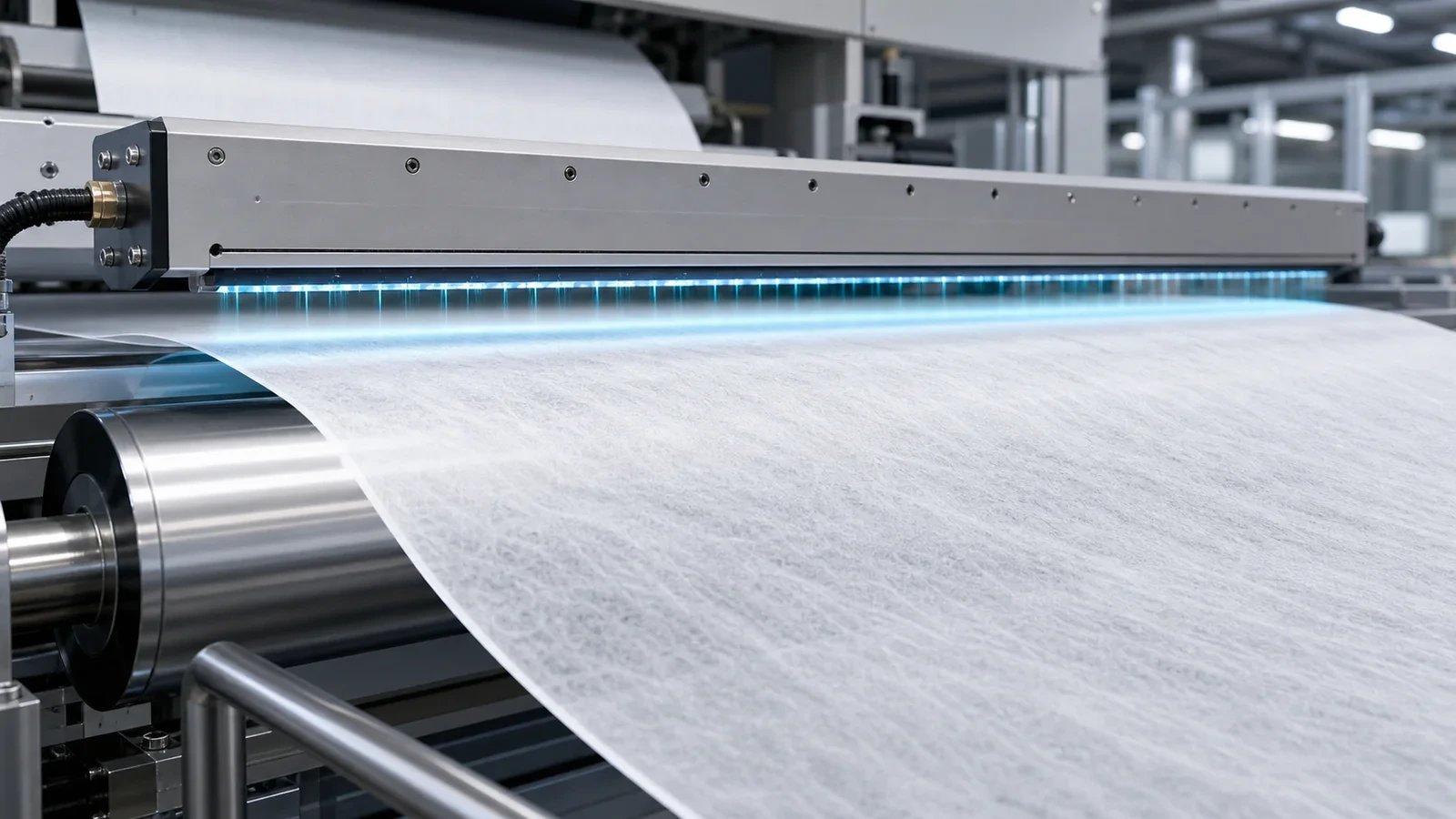
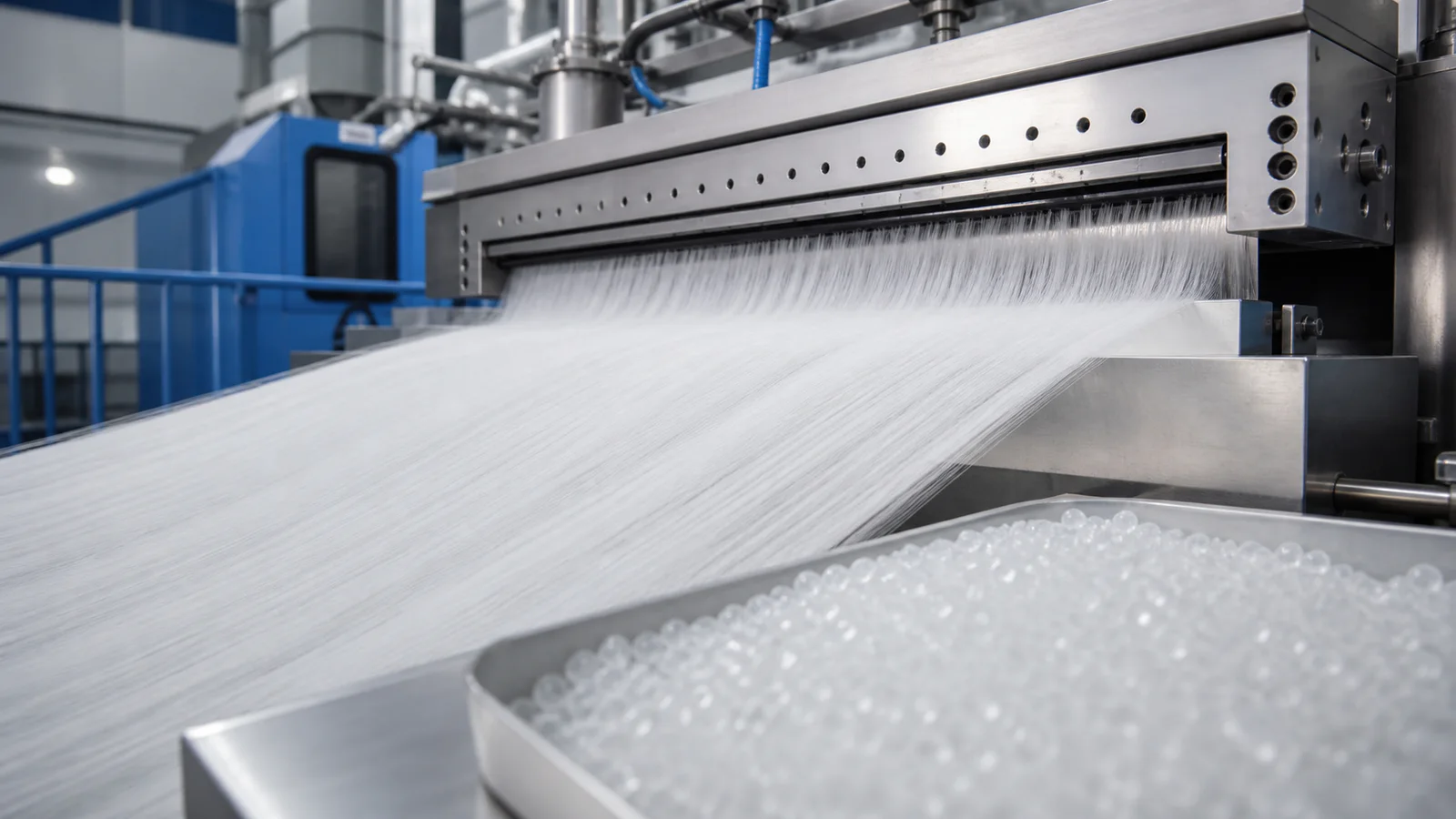
Water-electret processing uses water as part of charging a nonwoven web. One established hydrocharging method applies water jets or droplets and then dries the web, as described in the original 3M patent. Drying is part of that process, rather than an optional storage instruction.
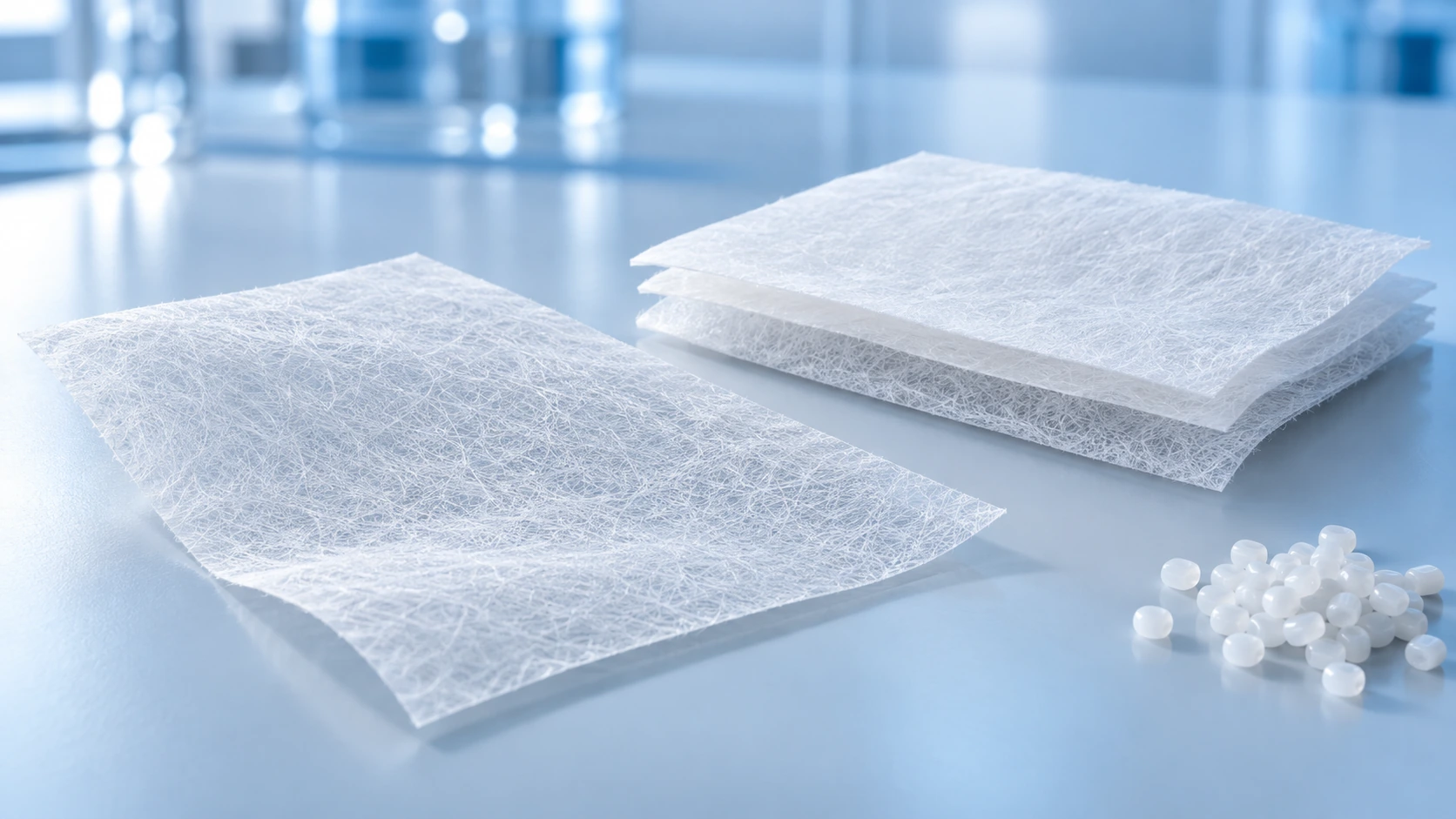
The process name does not establish that a material contains no additives, or that it never receives corona treatment. Published electret-web patents describe charge-enhancing additives and combinations of charging methods. Confirm the actual resin, additive system and charging route for the lot under review.
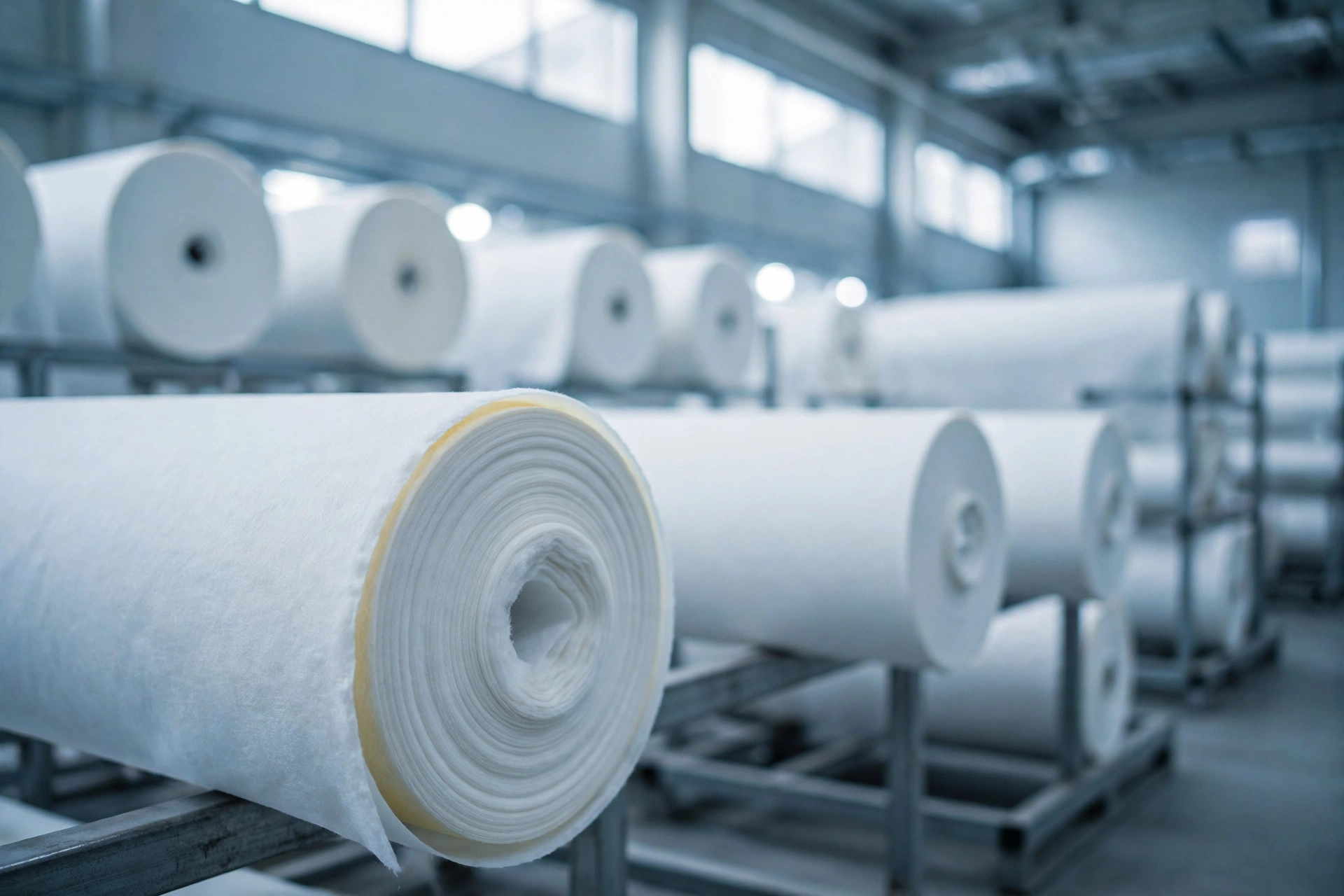
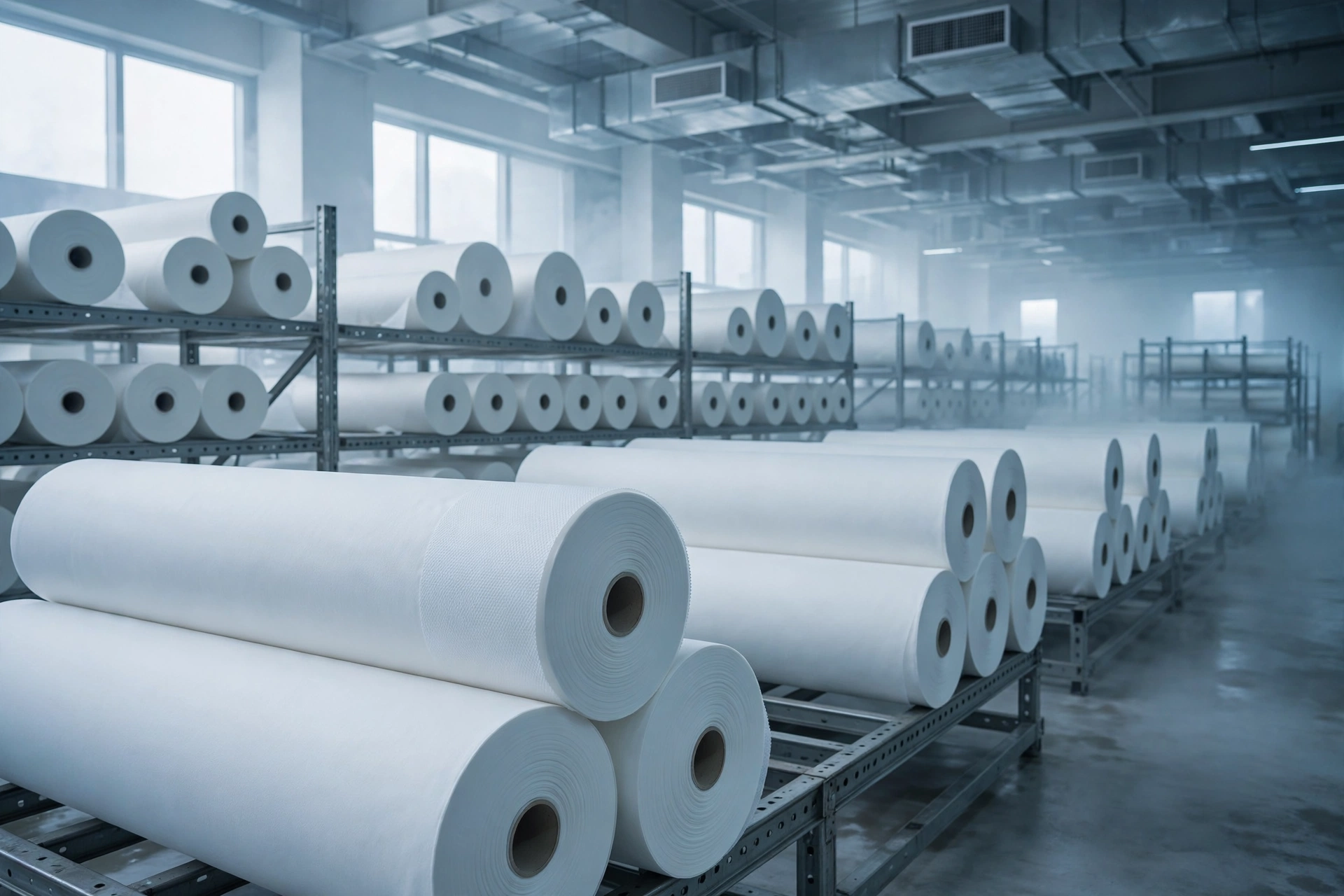
A dispatch result describes a sample at a particular time. To assess a stored roll, connect that result to its lot, packaging, transport history and the conditions used for the later measurement. Initial performance and storage suitability are related questions, but they require their own evidence.
Charge retention depends on the material and the test
Temperature, moisture exposure and time can matter to electret charge retention. The response also depends on the polymer, its wetting behavior, the charge-storage characteristics and the way the web was made. Do not describe every PP web as losing charge at the same rate whenever humidity rises.
A published comparison of PP, PVDF and PAN electret filters found different responses to thermal and humidity aging. The tested corona-charged PP media did not show the same humidity-related filtration deterioration as the more moisture-responsive materials. That study supports material-specific evaluation; it does not validate a shelf life for a customer’s water-electret roll.
Filtration also includes mechanical particle capture. A change in a surface-potential reading is not interchangeable with a change in filtration efficiency, and a lower efficiency result does not by itself prove charge loss. Check the test setup, sample identity and physical condition before assigning a mechanism.
Compare initial and conditioned filtration data
Request the test-method identifier and edition, challenge aerosol, flow or face velocity, specimen configuration, sampling location and pressure-drop result alongside filtration efficiency. A percentage without its method and conditions is not a reliable basis for comparing two rolls.
For conditioning, record temperature, relative humidity, duration, whether the sample was packaged, and how it was handled before retesting. Compare identified samples under the same agreed measurement procedure. Retained controls and lot-level records help distinguish a storage change from a difference between samples or tests.
Agree the acceptance criteria and the purpose of the evaluation before reviewing the outcome. An accelerated conditioning exercise can be useful, but it does not automatically reproduce a particular shipping chain or establish a maximum storage duration. Use a supplier-supported storage window for the specific product and packaging.

Drying and moisture need a separate quality review
For a hydrocharged web, ask how drying is checked before winding and wrapping. If moisture content is part of the specification, agree a method suitable for the material, a sampling plan and acceptance criteria. This guide supplies no universal moisture limit for PP meltblown.
Moisture control matters when investigating possible microbial contamination. EPA guidance identifies moisture as necessary for mold growth, but that general building-environment guidance does not establish how often water-electret media develop mold, or diagnose a particular roll. The presence of moisture alone is not evidence of contamination.
Consider residual process moisture, condensation, wet packaging, handling and storage exposure separately. A musty odor on unpacking does not prove a dryer fault. Corona-charged or uncharged media can also encounter wet conditions; the charging route alone does not demonstrate immunity to contamination.
Odor, spots and yellowing do not identify one cause
If an affected lot has unexpected odor or visible spots, keep its identity and handling history intact and refer it to the responsible quality team. Segregate suspect material pending assessment for its intended use. Do not assume that washing, heating, re-drying or recharging makes a questioned filter medium suitable again.
The phenolic-yellowing guide in this series explains a separate packaging and exposure investigation. Yellowing and an efficiency change may occur together, but that does not establish one shared cause or clear the production process of responsibility. Review material, process, packaging, transport and warehouse records together.
Compare affected and unaffected lots, retain relevant packaging and samples, and document when each observation first appeared. Testing and traceable records should guide the next decision. Appearance or odor alone cannot identify a microorganism, establish a performance failure or assign responsibility.
Questions to settle before the rolls ship
Use a short buying record that keeps performance evidence, moisture verification and storage instructions separate. Ask for clarification where a field is missing; a complete questionnaire is useful documentation, not proof that a supplier or lot has passed qualification.
- Initial filtration result: exact method, specimen identity, test conditions and pressure drop.
- Conditioned result: protocol, temperature, humidity, duration, packaging state and agreed acceptance criteria.
- Drying verification: how the web is checked before winding and any agreed moisture method, sampling plan and limit.
- Storage guidance: product-specific temperature, humidity, packaging, handling and recommended duration supported by the supplier.
- Packaging record: film, liners and other contact materials; assess BHT only against the relevant customer or industry requirement, not a universal 25 ppm limit.
- Traceability: batch identifiers, dispatch and receipt dates, storage logs, retained samples and a route for resolving complaints.
Prepare a storage and application review
Evaluating water-electret processing, or reviewing a stored roll that changed? Share the polymer and additive system, charging and drying route, lot identity, initial and conditioned test reports, packaging, exposure records and when the change appeared. Material suitability, storage limits and any commercial request remain subject to review for the actual application.
Sources and method scope
- US5496507A — Method of charging electret filter media — Original hydrocharging method includes water application and drying. A patent description is not validation of a customer’s product.
- EP3157650B1 — Electret webs with charge-enhancing additives — Documents additives, hydrocharging and combined charging routes. No patent processing values are adopted as Baibang recommendations.
- Polymers 2020, 12, 721 — Material properties and electret charge decay — Material-specific aging results; PP specimens were corona-charged. Not a hydrocharged-roll shelf-life validation.
- US EPA — Why is mold growing in my home? — General moisture/mold context, not filter-media incidence data or a diagnosis. No residential humidity target is adopted as a product specification.