White at wind-up, yellow at unpacking: where to start
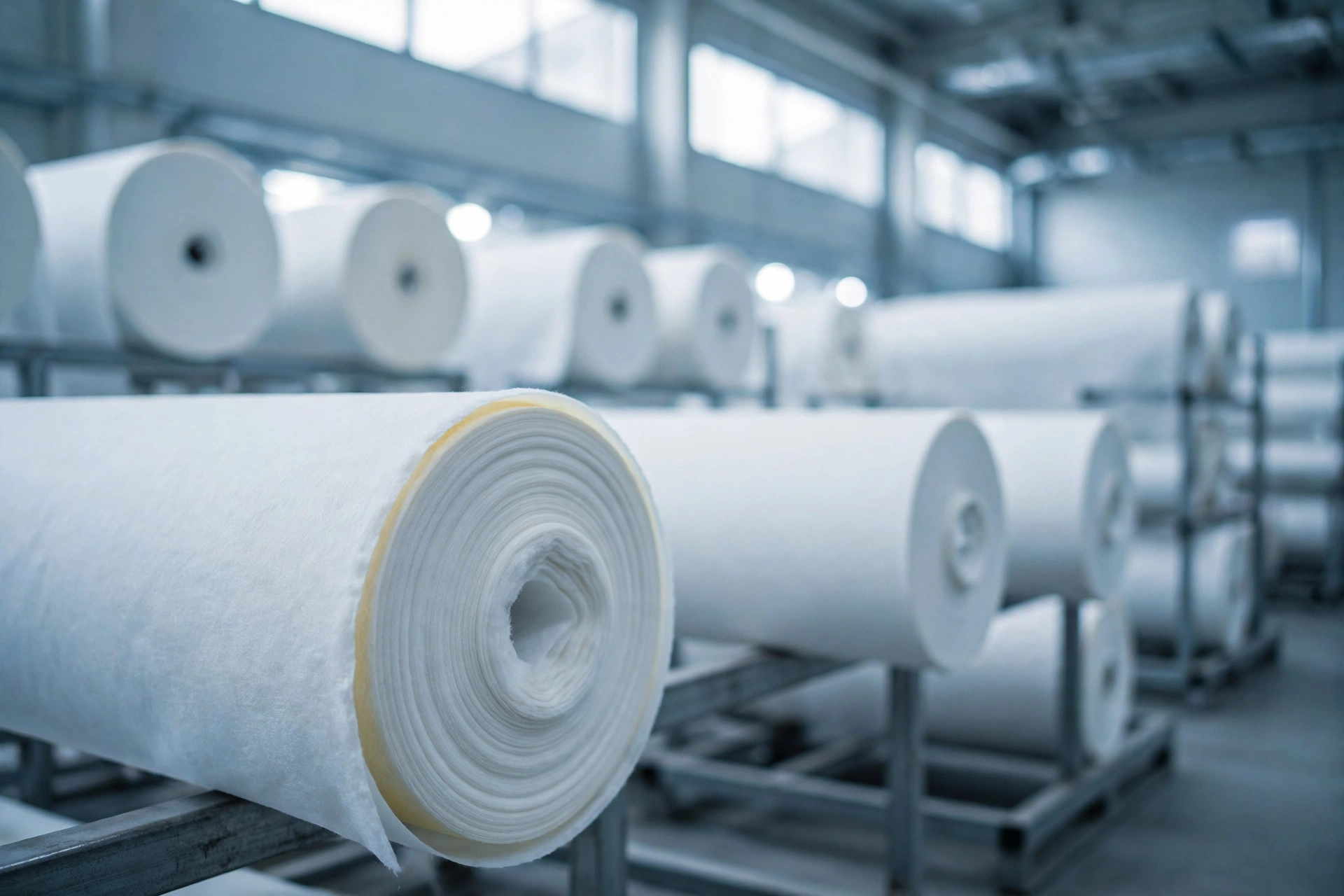
A white web leaves the production line. Weeks later, a roll shows yellow patches in storage or at the customer's site. The useful first question is when the change appeared and which materials or conditions the web encountered along the way.
Phenolic yellowing is one possible explanation. A storage-related change, especially on a white or pastel material, warrants investigation of this route. However, patchiness and timing do not prove its cause. Resin oxidation, process history, contamination and other discoloration mechanisms should remain in the review until evidence separates them.
The BHT and nitrogen-oxide route
BHT (butylated hydroxytoluene) is an antioxidant that may be present in plastic packaging, including PE or PP films. Transfer to a textile, followed by exposure to nitrogen oxides, can produce yellow compounds; alkaline conditions can favor the reaction. This mechanism is described in AFIRM's BHT chemical information sheet. A PE wrapper is a potential source to check, rather than evidence that a particular film contains BHT.
Review the complete contact and exposure history: film, bags, tape, liners, transport and warehouse air. Record temperature, humidity and storage duration to compare affected and unaffected lots. These records support an investigation; they do not establish a universal rate of yellowing or identify the cause on their own.
What matters for white PP meltblown
Light-colored media make an appearance change easier to notice. For meltblown rolls, review both the material and the packaging system, including any differences between the approved sample and the shipped lot.
Do not infer a greater yellowing susceptibility than spunbond or film from fine fibers alone. Product composition, packaging contact and exposure differ between applications. A comparison requires appropriate samples and tests, not a claim that meltblown is an inevitable victim.
- Keep a retained sample from the same production lot before packing.
- Identify packaging suppliers, film lots and any changes in tape or liners.
- Record when and where discoloration first appeared, including storage and transport conditions.
- Compare affected rolls with unaffected controls under documented conditions.

What a phenolic-yellowing test can tell you
ISO 105-X18:2007 describes assessment of a textile's potential for phenolic yellowing. It does not cover every cause of discoloration. A test kit such as James Heal's uses specified test paper, control fabric and BHT-free wrapping film under controlled conditions. Ask a qualified laboratory to confirm the method and edition required by your customer, specimen suitability and acceptance criteria.
Treat the result as a screening assessment of susceptibility under that method. It does not reproduce every warehouse or prove that packaging caused a particular complaint. Investigating an actual case may require separate packaging analysis and controlled comparisons of the retained web, wrapper and exposure conditions.
Keep packaging limits in their proper scope
AFIRM's Packaging RSL, Version 08.1 (2025), lists a BHT limit of 25 ppm for packaging component materials in its apparel and footwear supply-chain context. That is a specific RSL reference, not a universal legal limit for filter-media packaging, a filtration standard or a threshold that guarantees no yellowing.
Confirm the buyer's actual restricted-substance list and packaging requirements before specifying a limit. Ask for evidence tied to the relevant film or packaging component, supplier lot, test method and reporting limit. A general supplier statement should not be treated as proof for every shipment.
Correct the cause and recheck finished-media performance
Once the investigation supports a cause, qualify any proposed change with the packaging supplier and material team. For a suspected BHT transfer route, examine suitable packaging alternatives and contact controls, then check them against the buyer's requirements and actual use. A material or packaging change should be verified before it becomes a corrective-action claim.
Do not use washing, acid treatment or sunlight as an unvalidated remedy for finished filtration media. Any rework requires evidence that it is suitable for the product and preserves required performance. Likewise, appearance alone cannot establish filtration efficiency or electret charge retention. Test conditioned finished media using the agreed efficiency, pressure-drop and other acceptance methods.
Prepare a useful application review
Share the end use, PP resin and additive route, production lot, stage at which the color changed, packaging details, storage history and available test results. Photos taken under consistent lighting and affected versus unaffected samples can help define a comparison. With this information, Baibang Materials can discuss the application route and missing evidence without promising a cause or a solution before testing.
Sources and method scope
- AFIRM: BHT chemical information sheet, Version 2.0 (March 2021) — Mechanism, potential packaging sources and supplier checks.
- ISO 105-X18:2007: assessment of potential phenolic yellowing of textiles — Method scope; other discoloration mechanisms are outside that scope.
- James Heal: Yellowing Test Kit operator guide (2013) — Controlled test materials and predictive assessment.
- AFIRM Packaging RSL, Version 08.1 (2025) — Specific packaging RSL context for the 25 ppm example; the download may change with later editions.