One inquiry, several evidence questions
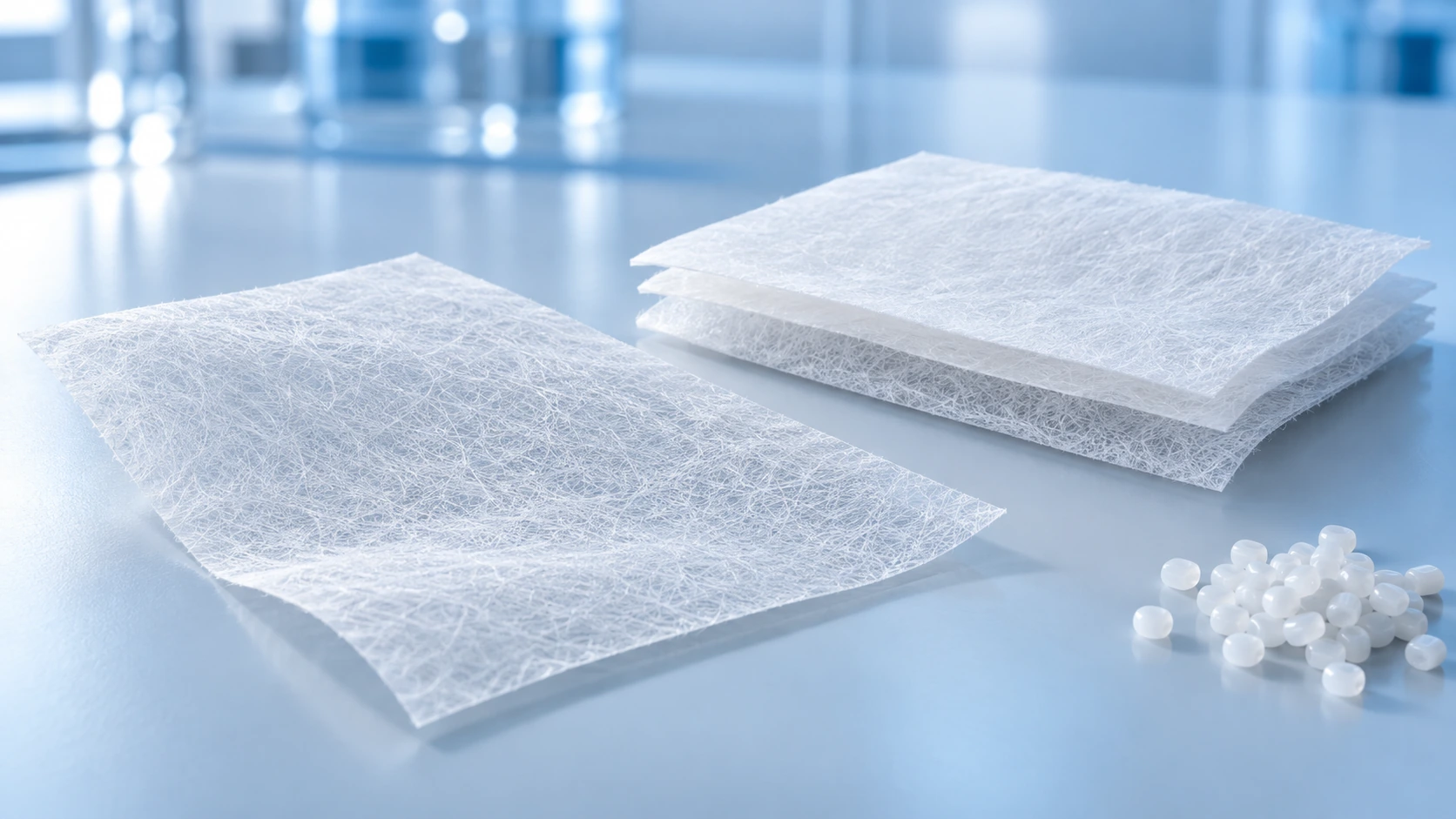
A PP meltblown web that changes color raises a practical sourcing question: which material or process change deserves a trial? For a water-charged filtration medium, the discussion should include the base resin, any electret additive used, the actual line and the finished-media requirements.
This guide helps prepare that discussion. It does not identify a discoloration mechanism from a photo or establish that a proposed resin and additive combination will meet both color and filtration requirements.
Record the observation before naming the cause
Record the first stage at which the change was noticed and keep affected and unaffected samples with lot identification. A fresh-web observation and a complaint after storage need different comparisons.
Phenolic yellowing is a particular discoloration route. ISO 105-X18 assesses its potential in textile materials; its scope excludes other yellowing causes. A laboratory should confirm the method is suitable for the specimen and the buyer’s requirement. ISO 105-X18
- Incoming pellets, fresh web, after charging, after any drying, or after storage: when was the change first seen?
- Which resin, additive and packaging lots were used, and is there a retained reference?
- Did the affected and unaffected material share the same thermal history, handling and storage exposure?
- Which color assessment and finished-media acceptance requirements apply?
Review the resin without reducing the choice to MFR
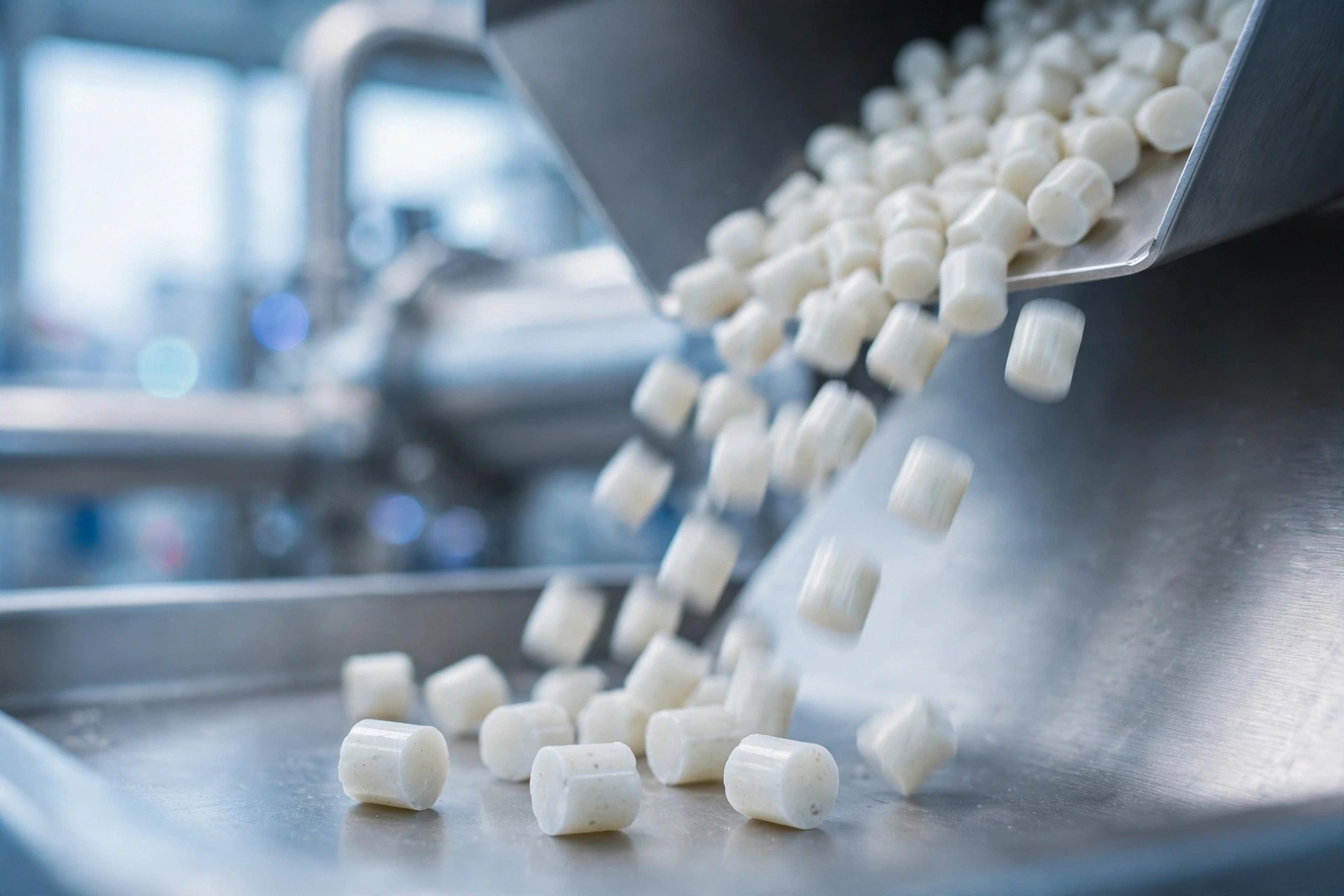
Ask for the resin identity, the current technical sheet, the MFR method, test temperature and load, and the lot evidence relevant to the complaint. Treat a number without its measurement conditions as incomplete selection information.
Stabilizer selection belongs in the review: BASF’s fiber-additive literature covers processing stability and gas-fade resistance. Use that background to ask about the actual grade’s stabilization system and traceable color evidence for your web. BASF fiber additives
Ask the supplier what the proposed color-stability claim actually covers: a named screening test, a particular process trial, or a documented storage study. Keep those scopes separate. Request the conditions and the tested lot before comparing alternatives.
Review the actual water-electret route
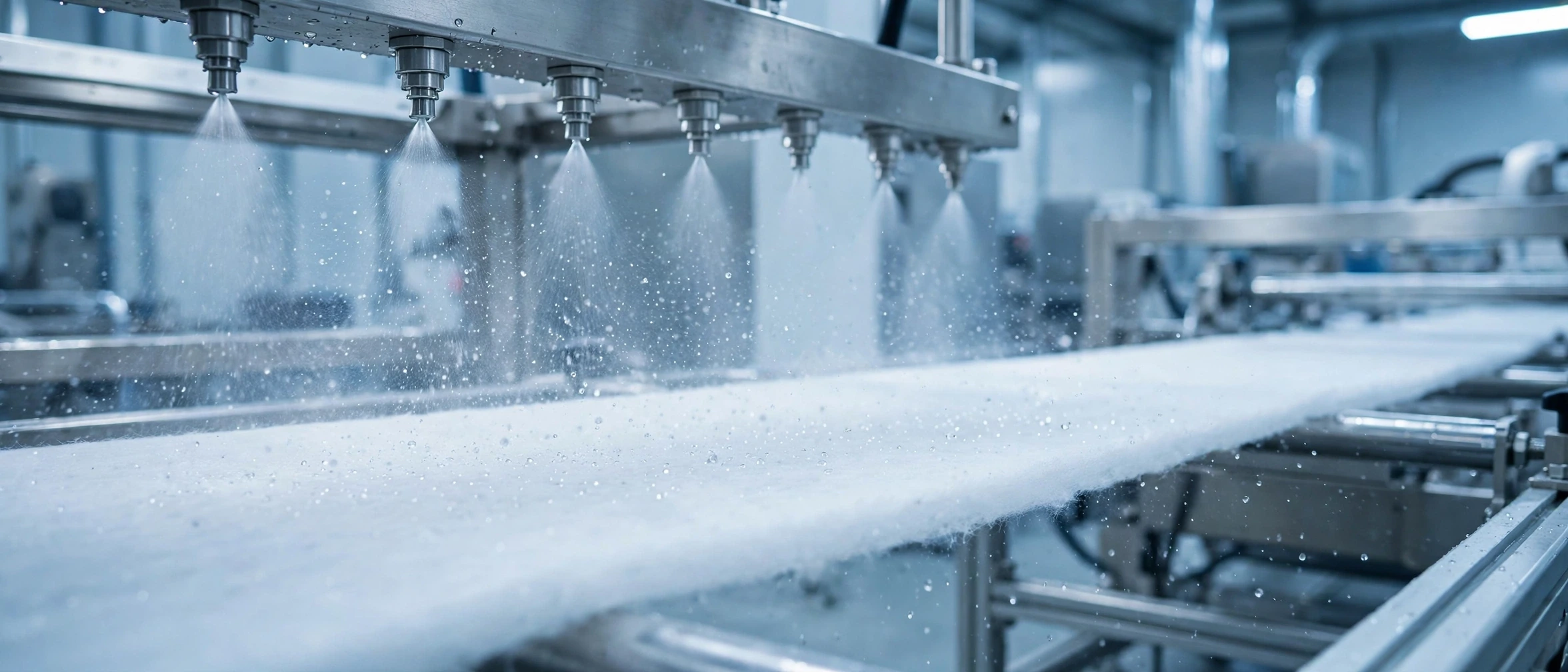
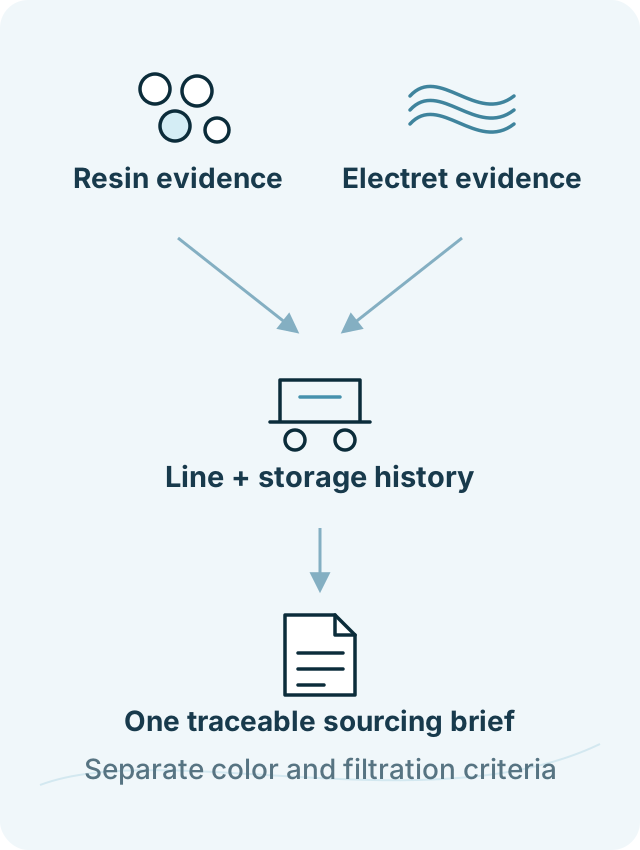
Where an additive is used, provide its identity and addition level and the blending route. Record the charging equipment and operating conditions in either case. Include water information, handling and any drying step actually used; do not insert a separate dryer into the process description if the line does not have one.
Avient describes hydro and corona charging routes and charge-storage additives for PP meltblown. Its product literature provides background on the electret function, not evidence that a different resin–masterbatch combination will preserve color and filtration performance. Avient electret overview
Specify color and filtration checks separately. A light-colored web is not proof of charge retention, and an acceptable filtration result is not proof that the discoloration mechanism has been resolved.
Agree the comparisons before changing materials
A practical review can start with the current material as a reference and one documented candidate. Agree which variables will be kept comparable and record any changes required to run the candidate safely within the supplier and equipment guidance.
Keep resin-only, packaging and finished-media evidence distinct. James Heal’s phenolic-yellowing materials include defined papers, control fabric and wrapping film; an ordinary sample photograph is not a substitute for a suitable test. James Heal test materials
- Trace the reference and candidate to material and production lots.
- Agree the specimen, method, conditions and buyer acceptance criterion for the color question.
- Check processability, web appearance and the agreed filtration and pressure-drop requirements.
- If storage performance matters, agree the storage or conditioning study and follow-up period before interpreting the result.
Prepare the first material review
Share the application, current resin and complete flow specification, additive and charging route, color-change stage, packaging details and available test reports. Add the target web and the buyer’s finished-media requirements.
Baibang’s existing PP meltblown material and water-electret product information can be starting points for discussion. Ask for the current grade documents and the evidence relevant to your application. Request grade-specific documentation and a matched line trial before selecting a color-stability option or combined material route.
Contact Baibang Materials with the available facts and the evidence you need for the next decision.
Sources and method scope
- ISO 105-X18:2007 — public scope — Phenolic-yellowing potential only; full paid procedure not accessed. Confirm suitability and buyer requirement with the laboratory.
- BASF — additive solutions for fiber enhancement — Background on stabilization and gas-fade resistance across fiber applications. No Baibang or hydrocharged anti-yellowing grade validation.
- Avient — MagIQ nonwoven electret additives — Supplier background on charging and charge storage. Its own product statements must not be transferred to Baibang grades.
- James Heal — Test Materials brochure — Specified screening consumables; not a full laboratory method, diagnosis or Baibang report.
General technical references do not establish a diagnosis, Baibang product validation or guaranteed combined color and filtration performance.